
Competition project · Felipe VI Park, Logroño
Concept
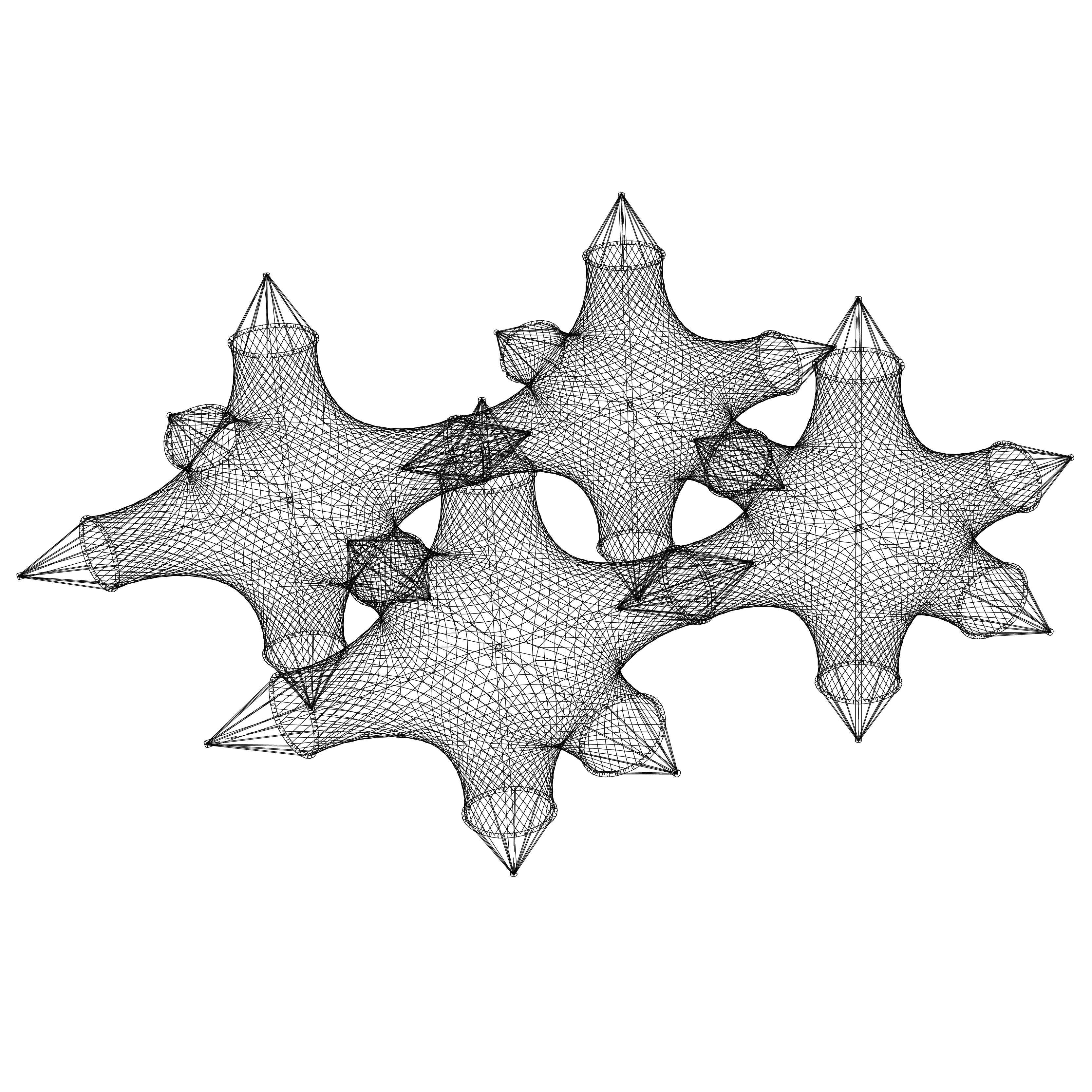
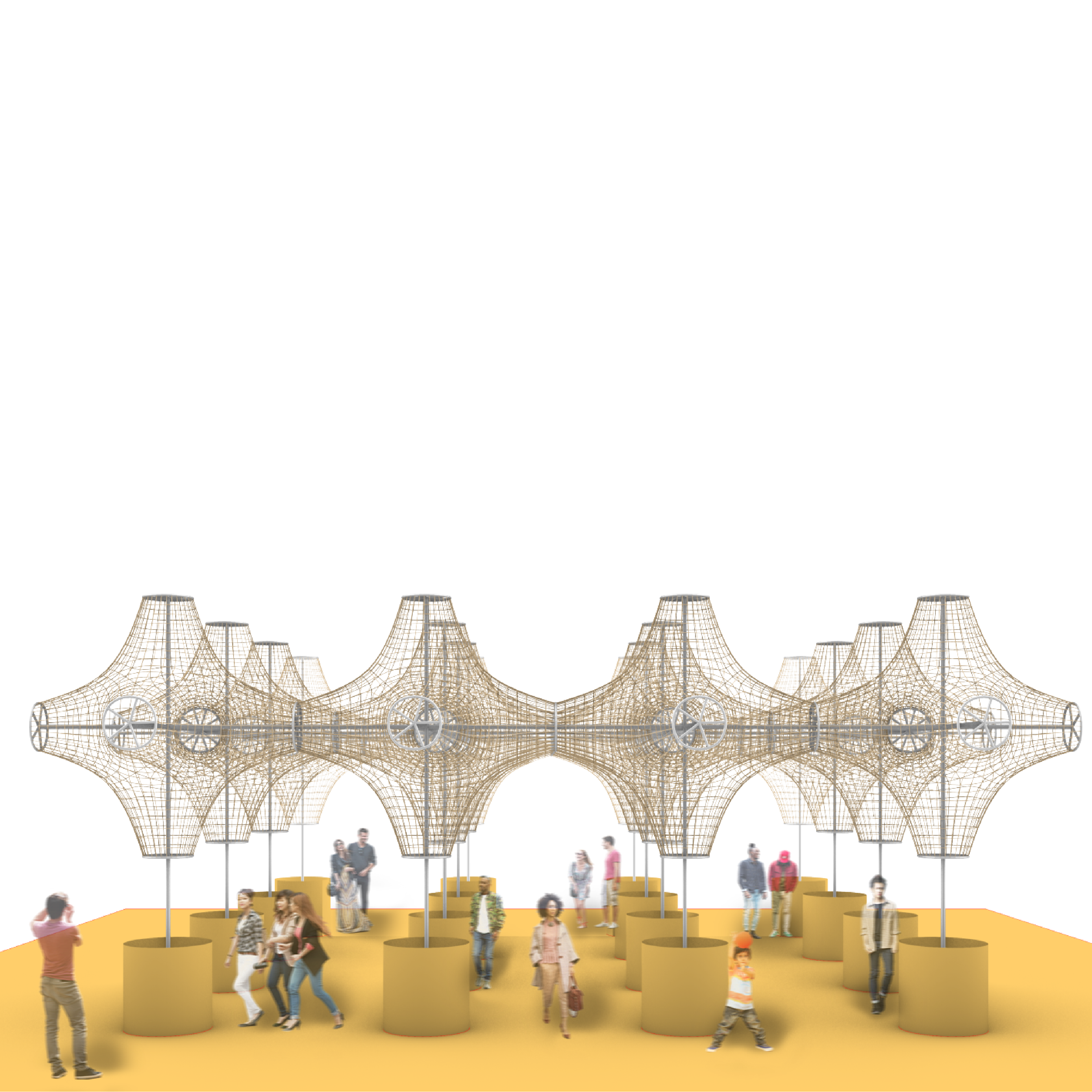
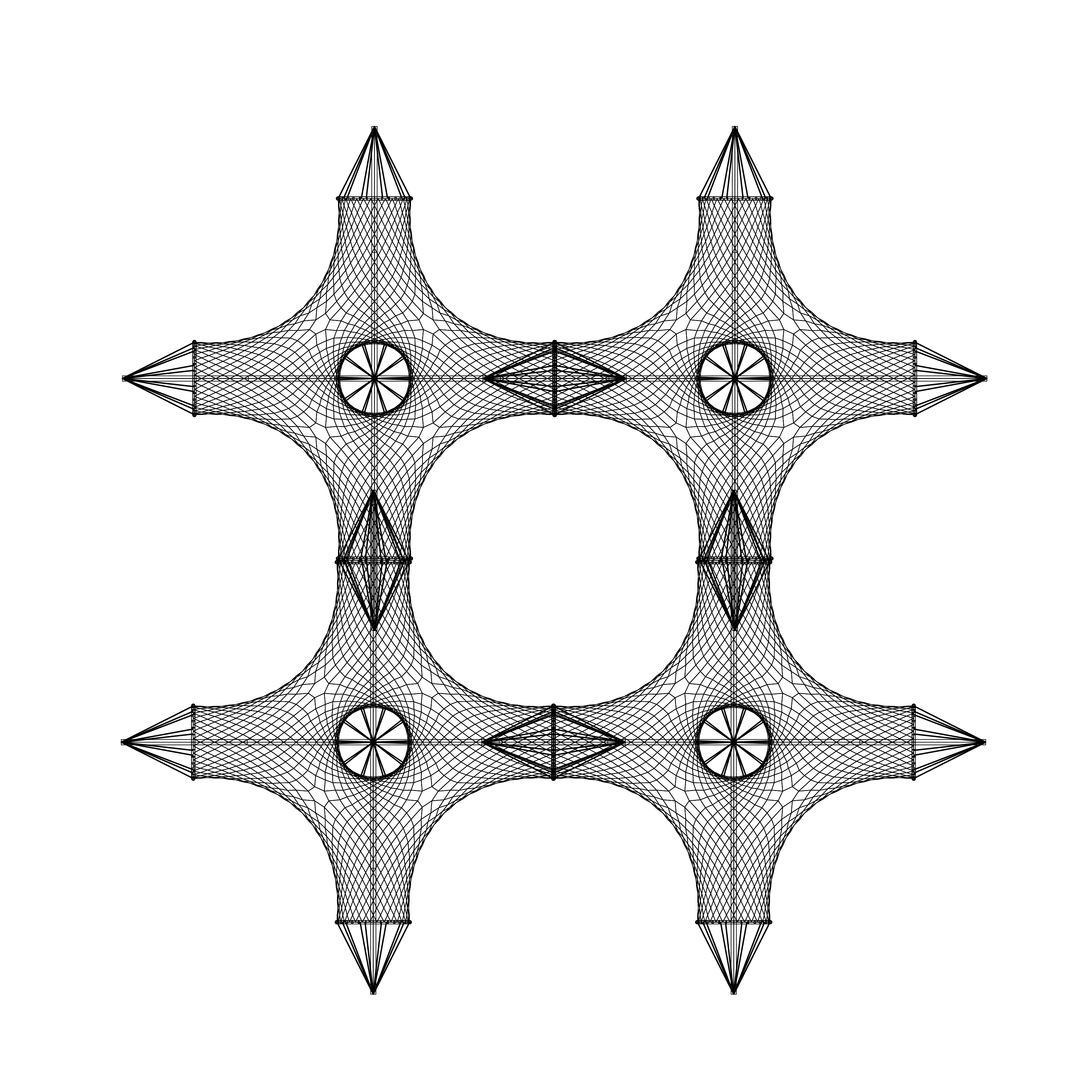
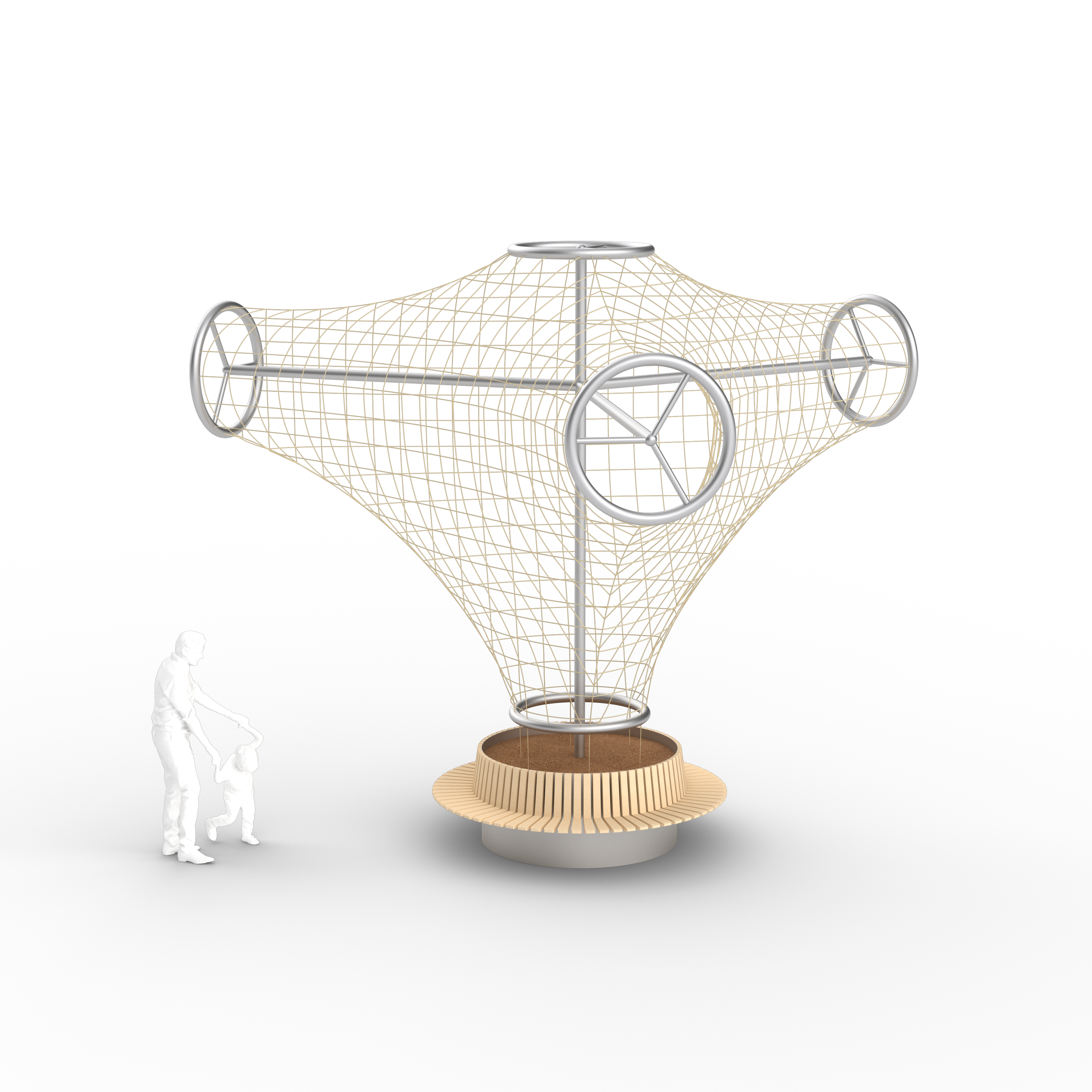
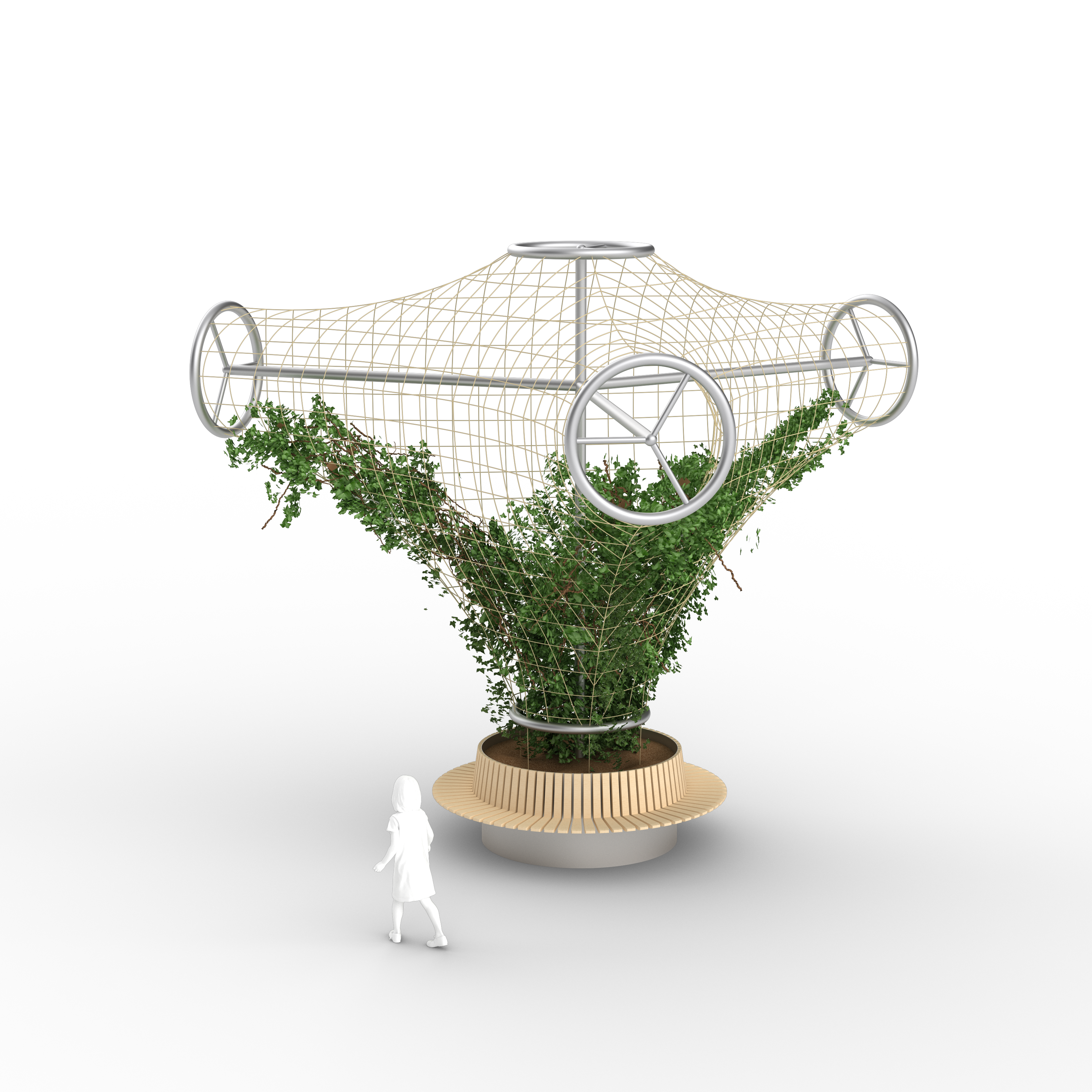
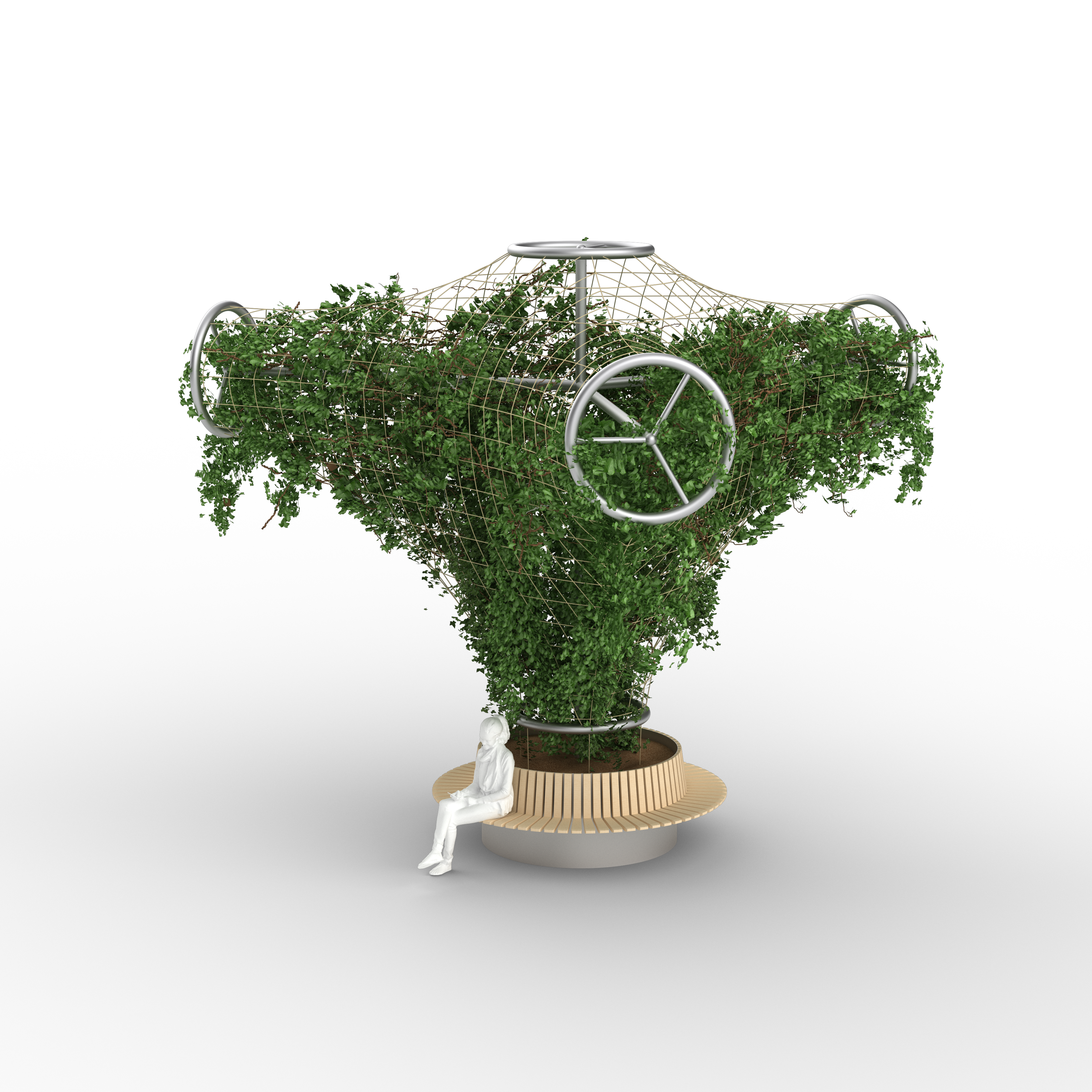
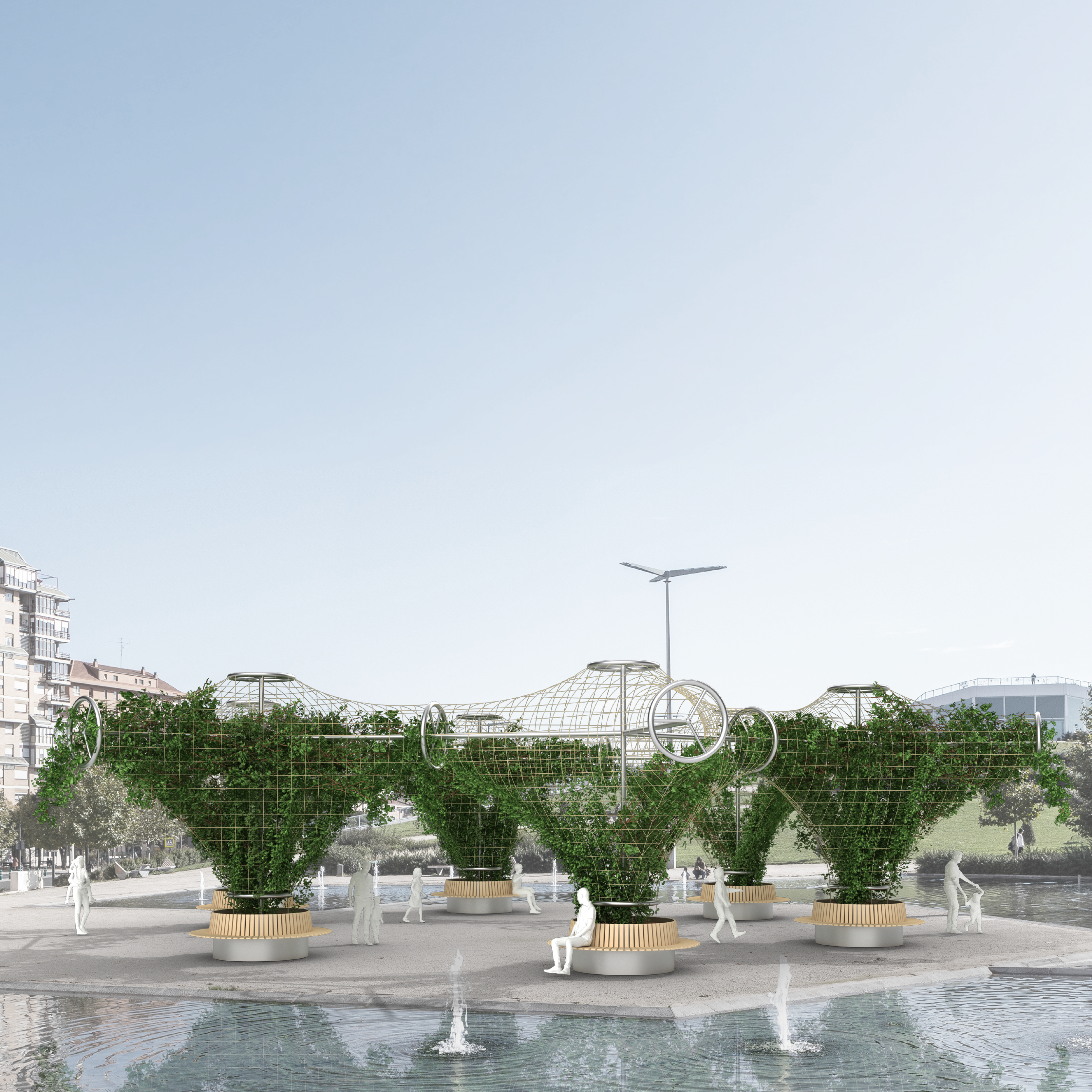
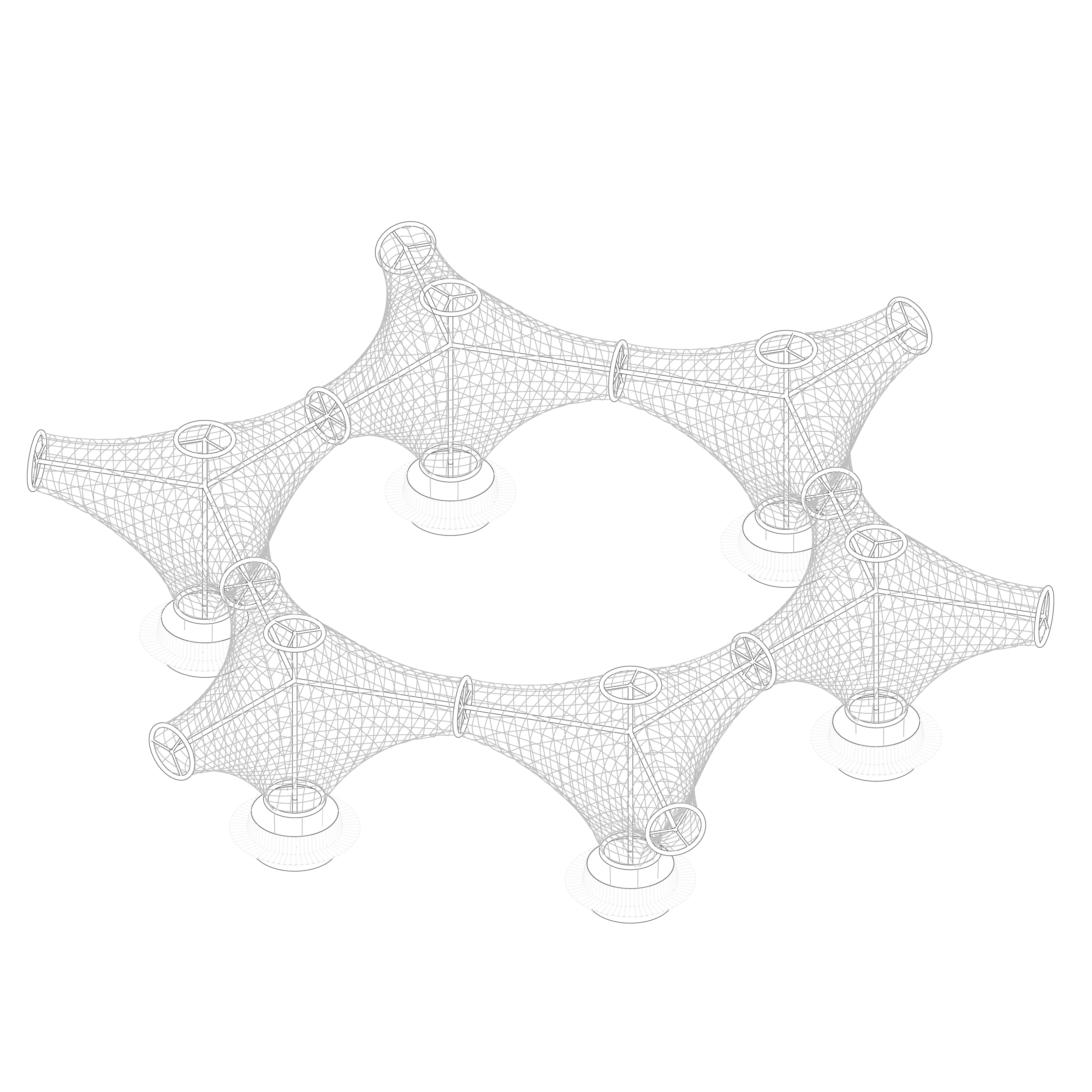
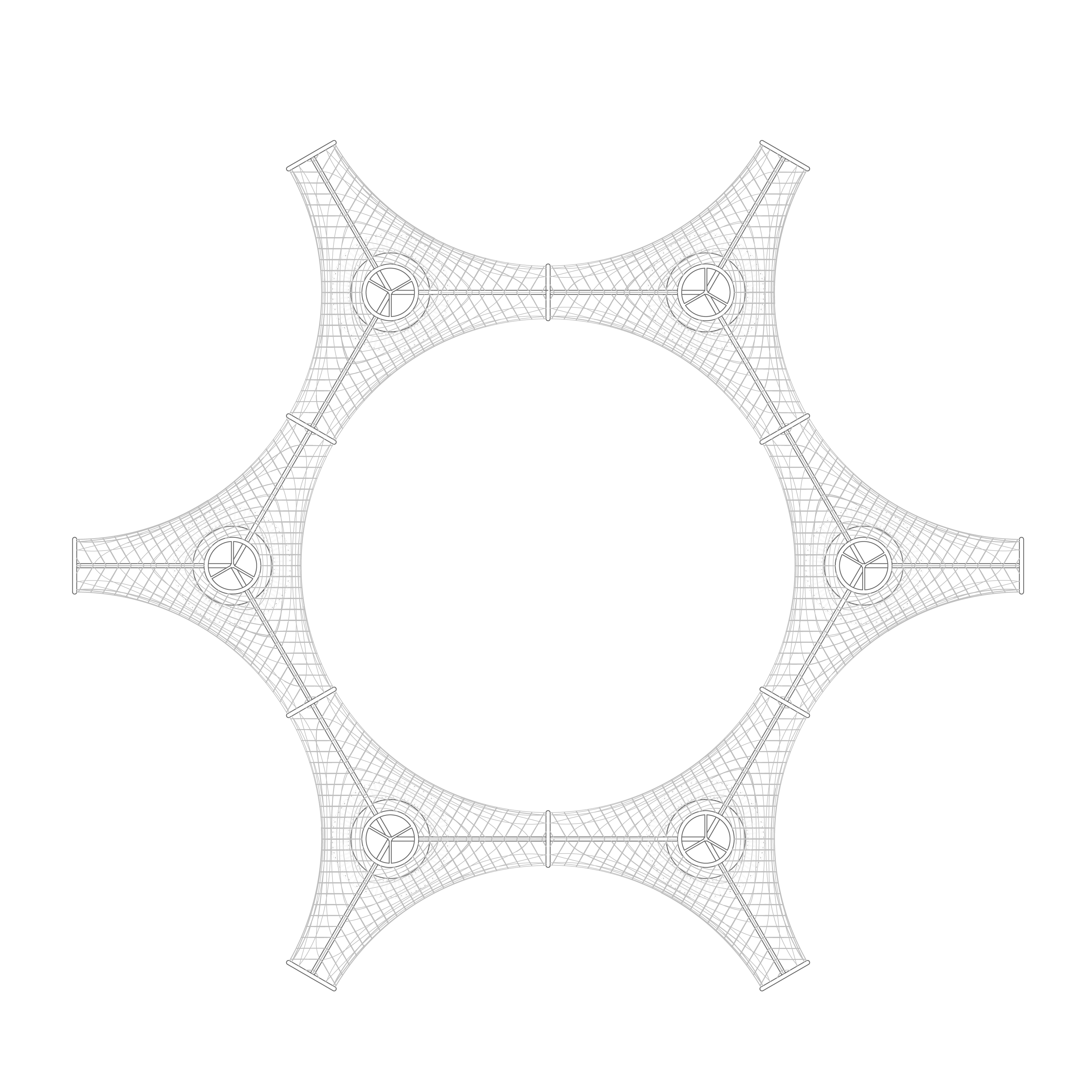
‘Plants Can Play’ transforms a hexagonal square into a vibrant green space that fosters biodiversity, cools the city, and encourages community use. Its centerpiece is a three-dimensional modular trellis based on the ‘Schwarz P surface’, creating a net-like framework of interconnected rings to support climbing plants.
Structure and Materials
Each 6-meter-wide module includes a circular planter that doubles as a bench, filled with climate-appropriate plants. The trellis is made from steel-core ropes covered in weather-resistant polypropylene, providing a flexible and durable structure.
Impact and Use
The system creates a seasonal green canopy that provides shade, enhances air quality, and supports urban wildlife. Arranged in a hexagonal layout, it accommodates markets, performances, and unstructured play, blending functionality with aesthetic and environmental benefits.
Scalability
The design is flexible and replicable, offering a model for integrating greenery into urban spaces.
Concept proposal · Competition · London
Concept
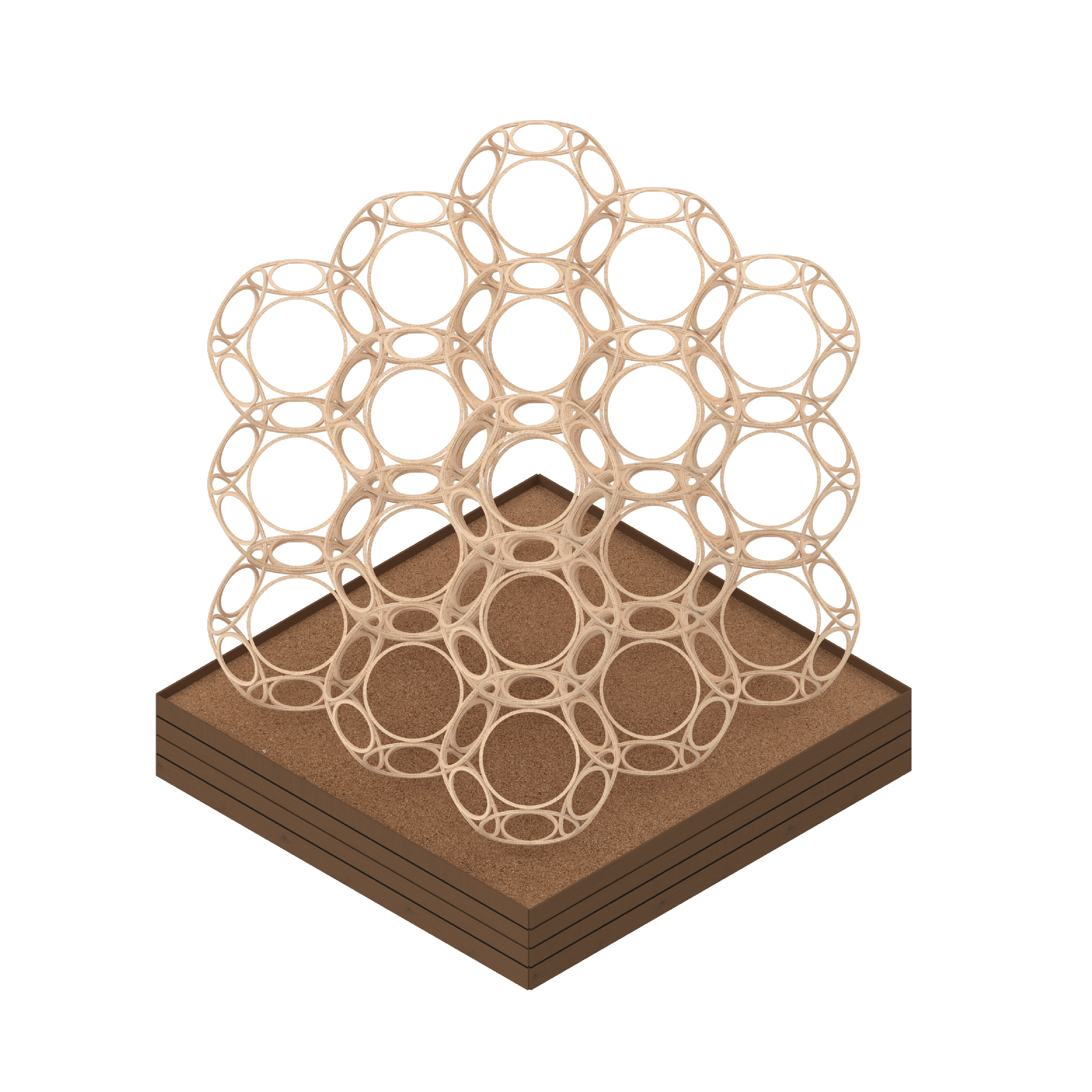
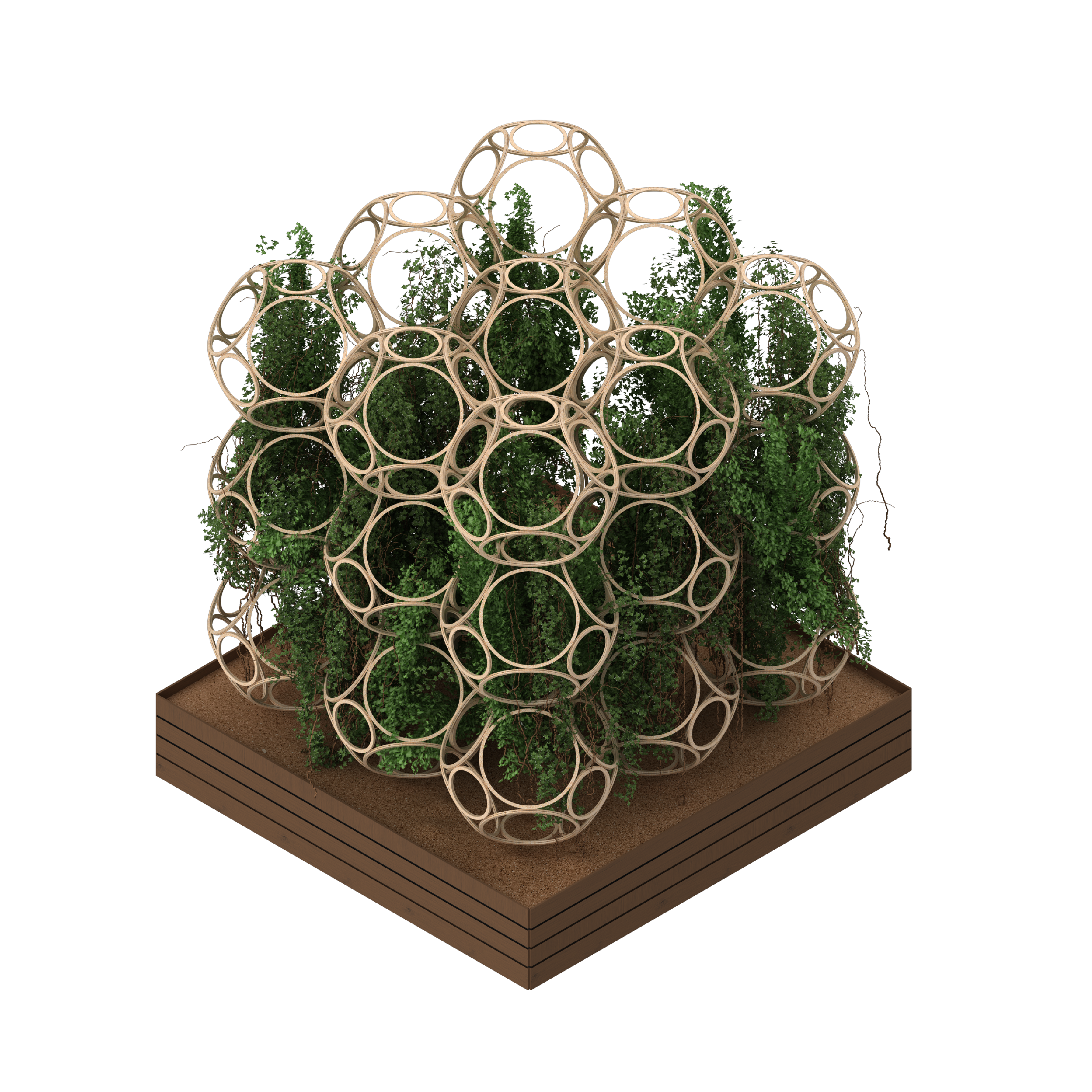
‘Anti-Volume’ is a geometric trellis made of modular truncated octahedra. Interconnected wooden rings create a lightweight, skeletal framework that defines space without enclosing it. Climbing plants grow from planters beneath, gradually filling the structure and transforming it into a living, organic volume.
Time and Transformation
The trellis evolves over time. Initially minimal and open, the structure becomes dense and lush as the plant spreads, turning absence into presence. Wooden rings serve as footholds, guiding growth and redefining the spatial character.
Material and Structure
The system is self-supporting and material-efficient. The trellis is fabricated from durable, weather-resistant Medite Tricoya Extreme, while the planter is clad in red Louro wood, contrasting the lightness of the structure.
Future Potential
Designed to be adaptable, the installation can be relocated to continue its growth and transformation in a new context.
Competition project · Barcelona
Concept
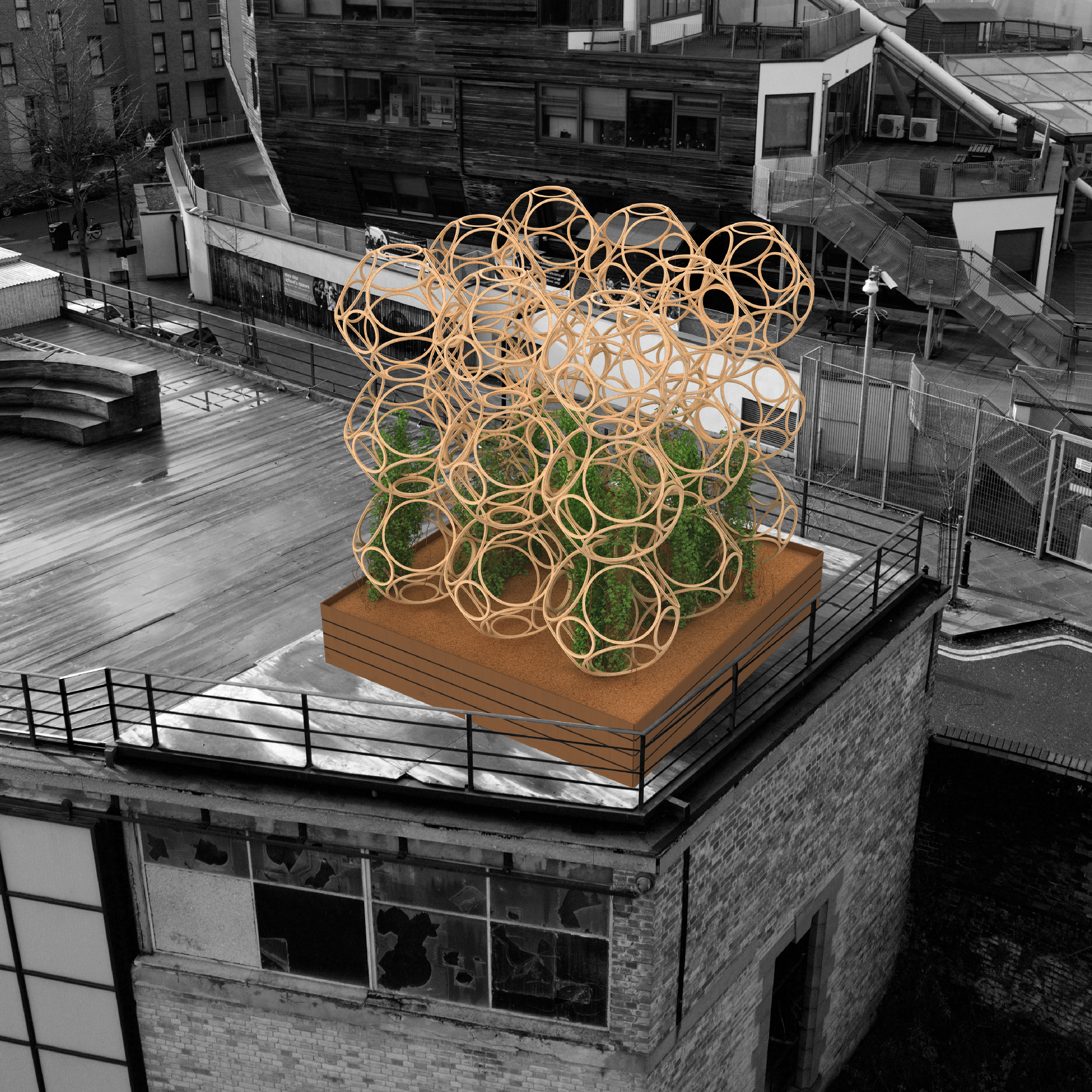
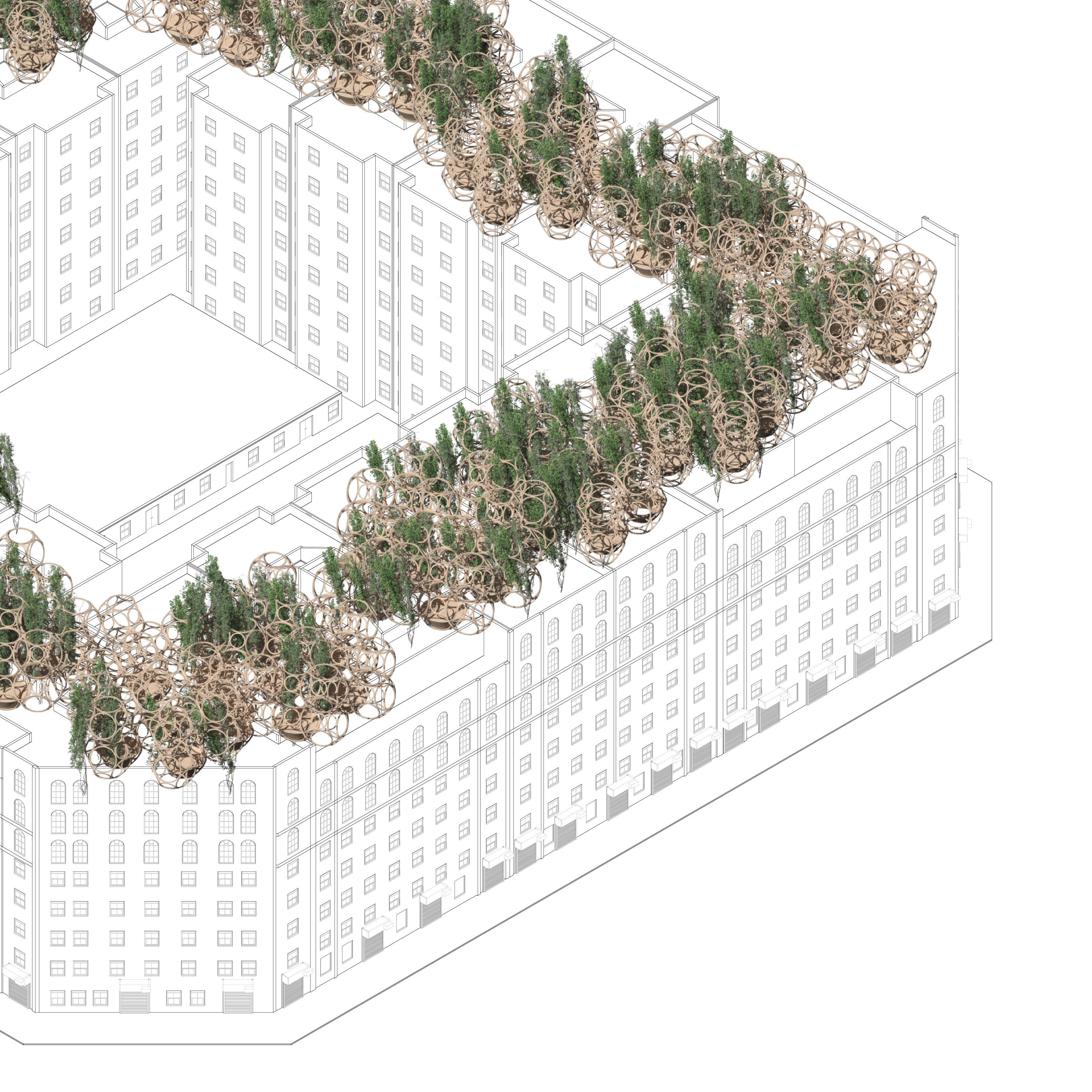
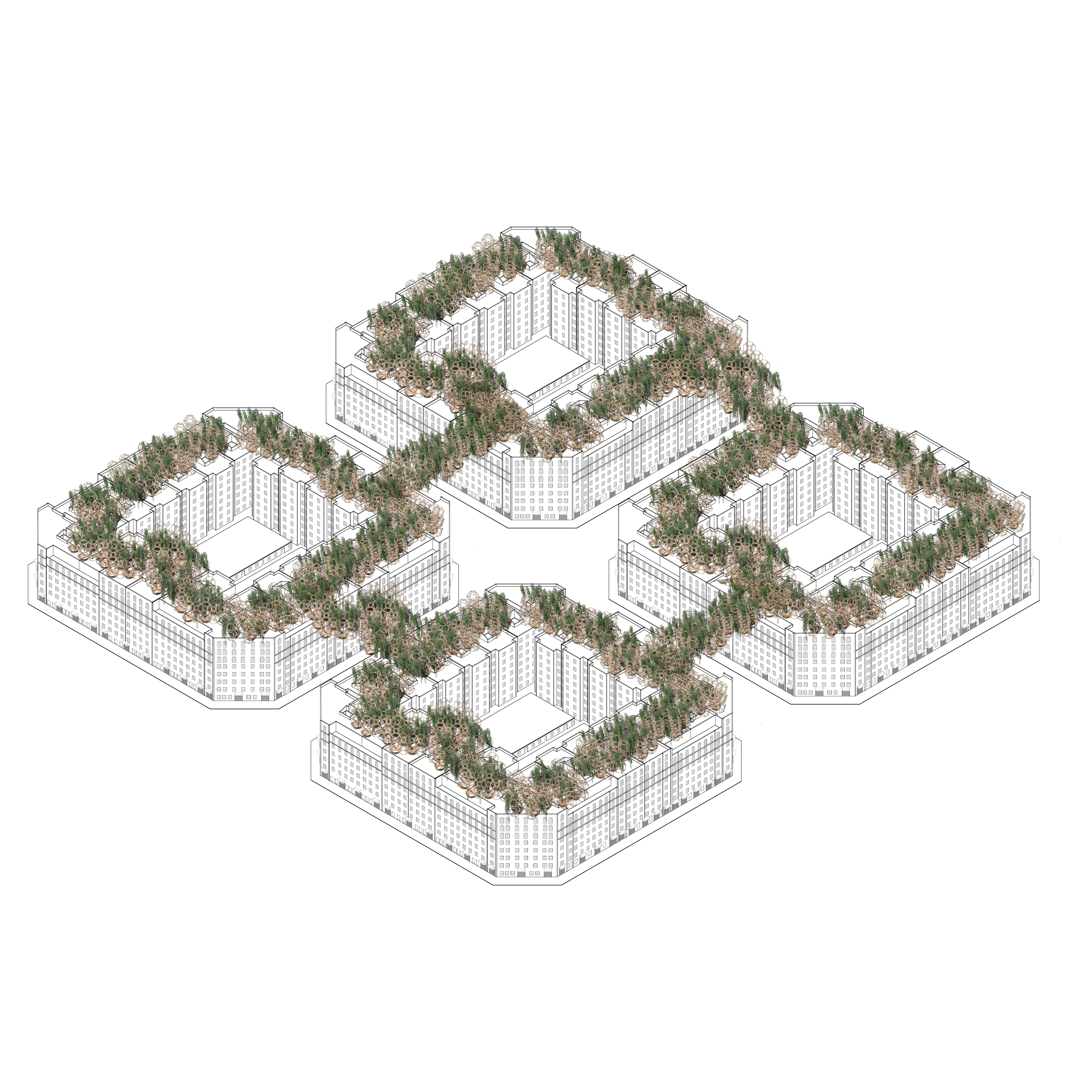
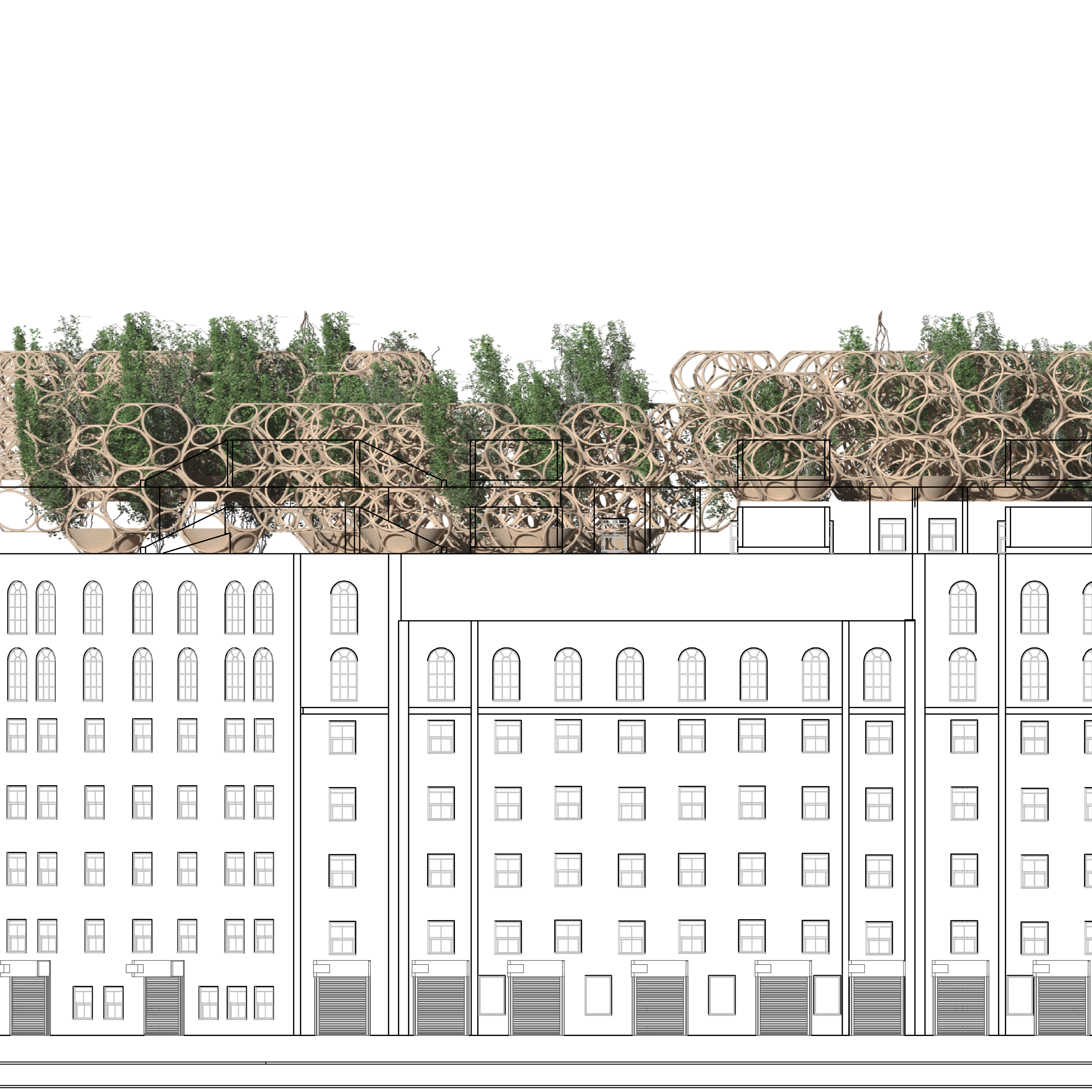
LIANAS TRELLIS transforms unused rooftops in Barcelona’s Eixample into modular green spaces using climbing plants. Truncated octahedron-shaped trellises create a scalable framework that maximizes rooftop areas and supports growing plant canopies.
Structure and Materials
The trellis system is modular and lightweight, designed for easy stacking and interconnection across rooftops. Materials are durable yet minimally intrusive, allowing secure rooftop installation without adding significant load. Climbers with small root systems and fast growth cover the structures, creating dense greenery over time.
Impact and Ecology
The green canopies provide shade, reduce the urban heat island effect, improve air quality, and attract urban wildlife, enhancing biodiversity.
Scalability
The modular design allows replication across rooftops or other urban contexts, offering a flexible and adaptable model for sustainable city greenery.
Competition project · Paris
Concept
‘Green Canopy’ creates a modular trellis system over a public plaza, based on ‘Schwarz P surfaces’. Individual net-like modules assemble into a continuous canopy, transforming open space into a shaded, green gathering area.
Structure and Materials
The system is modular and scalable, allowing the canopy to adapt to the plaza’s layout. Each module is composed of interconnected rings or ropes that support climbing plants. Over time, the plants cover the structure, creating a dense, living roof while maintaining an open, airy framework for visitors.
Impact and Use
The canopy provides shade, encourages community interaction, and improves microclimate conditions. It attracts birds and insects, enhancing urban biodiversity, while also visually softening the plaza with seasonal greenery.
Scalability
The modular design allows the system to be adapted to different public spaces and urban contexts, offering a flexible solution for adding greenery in dense cities.