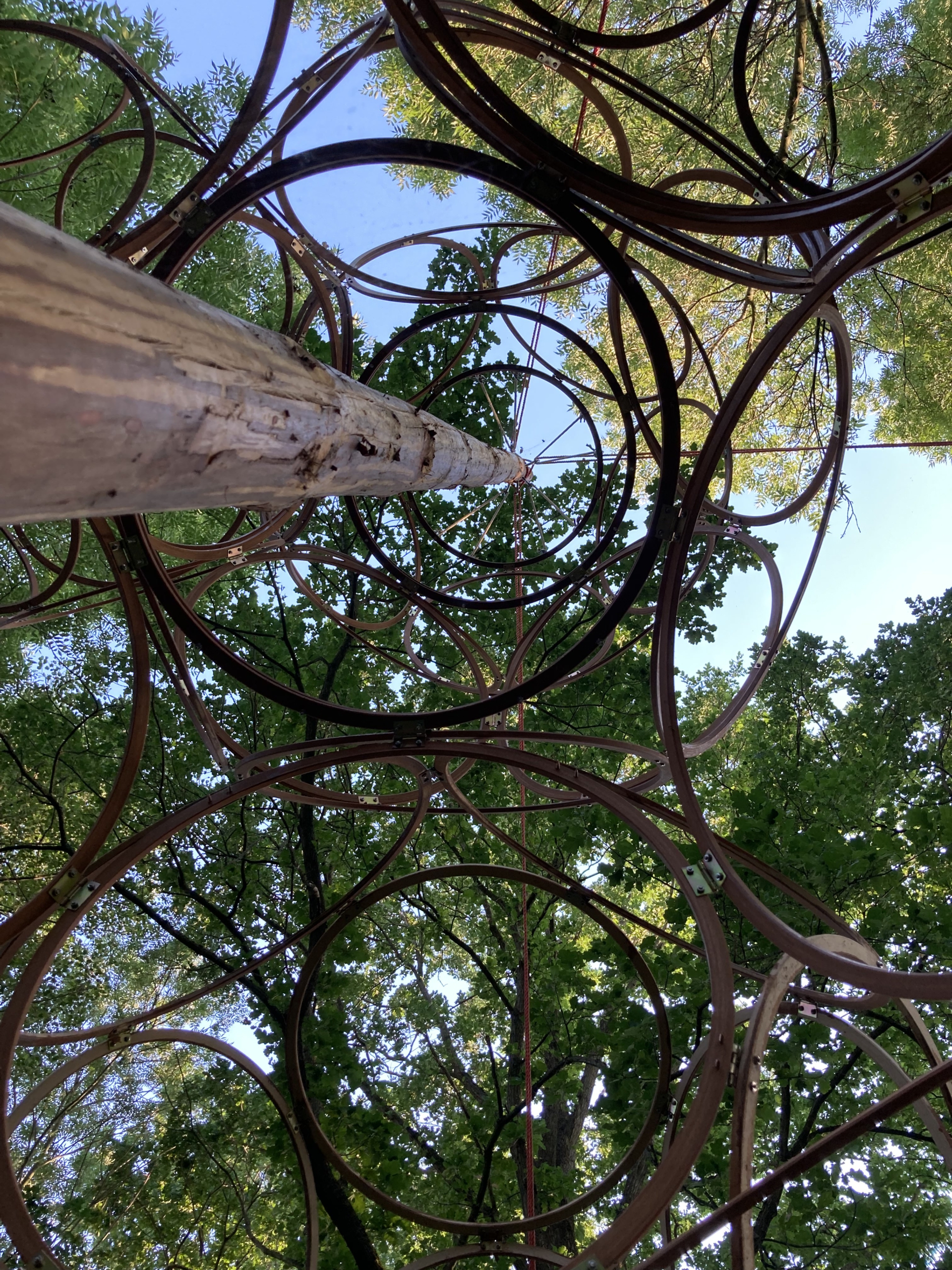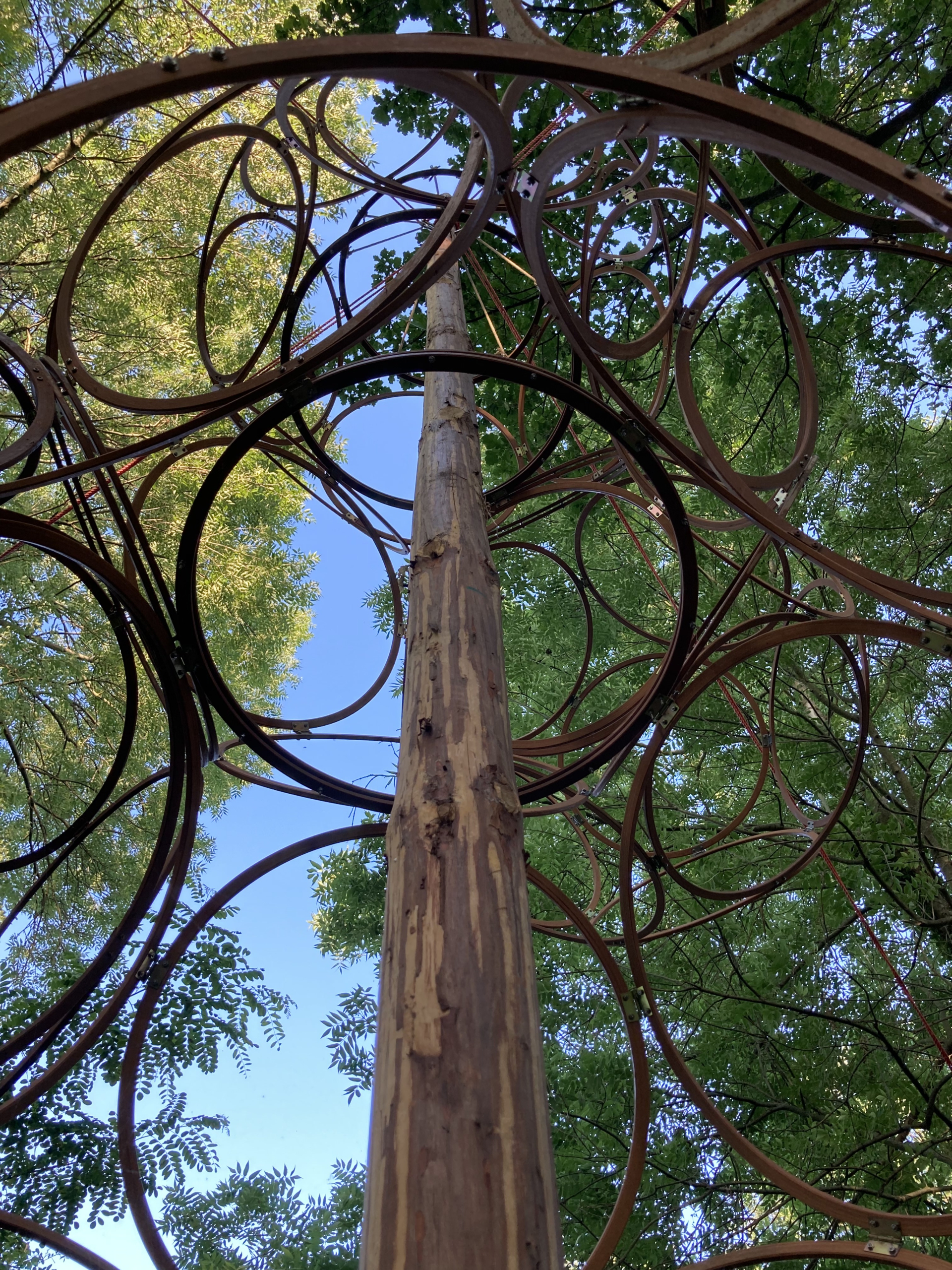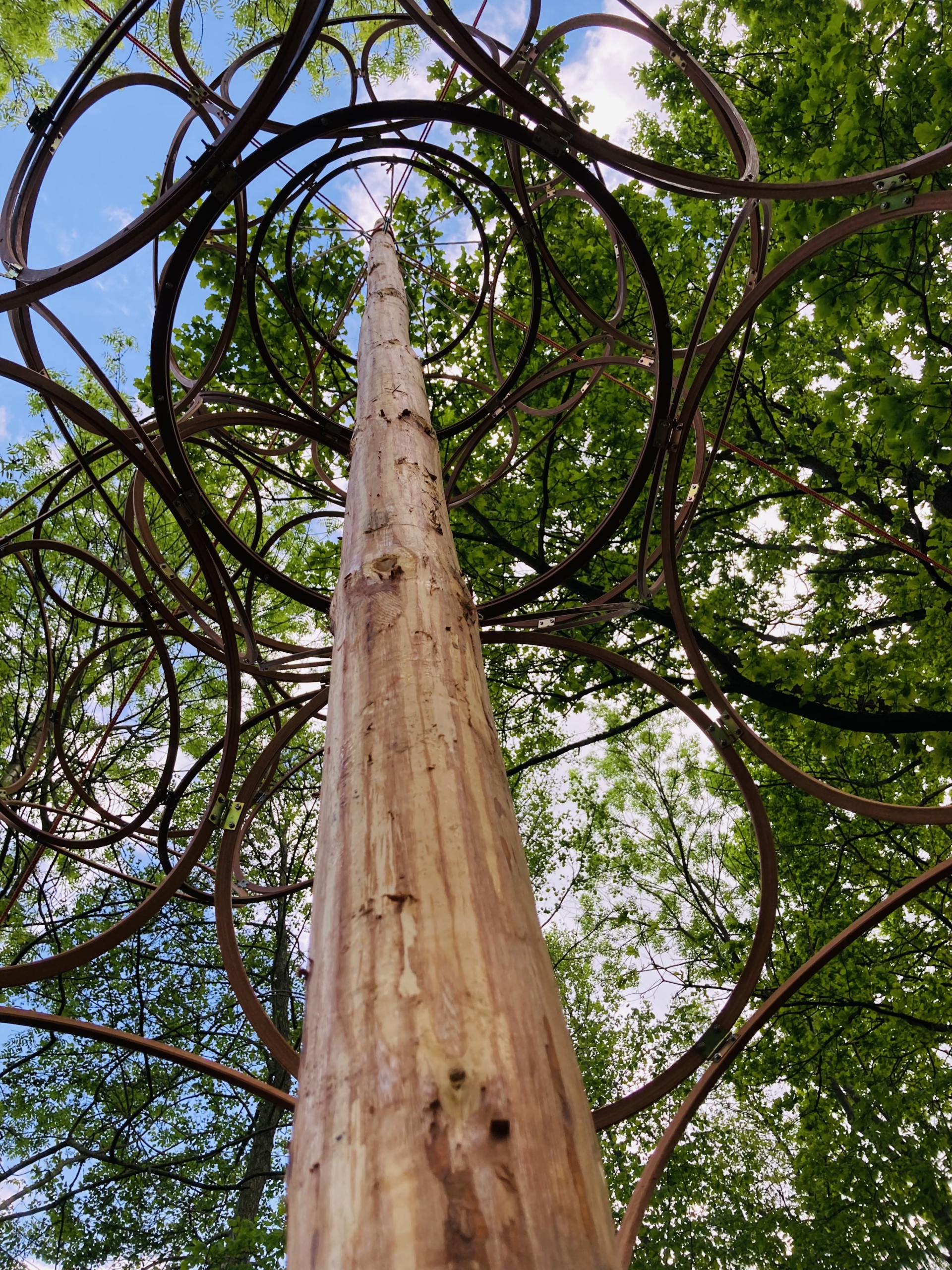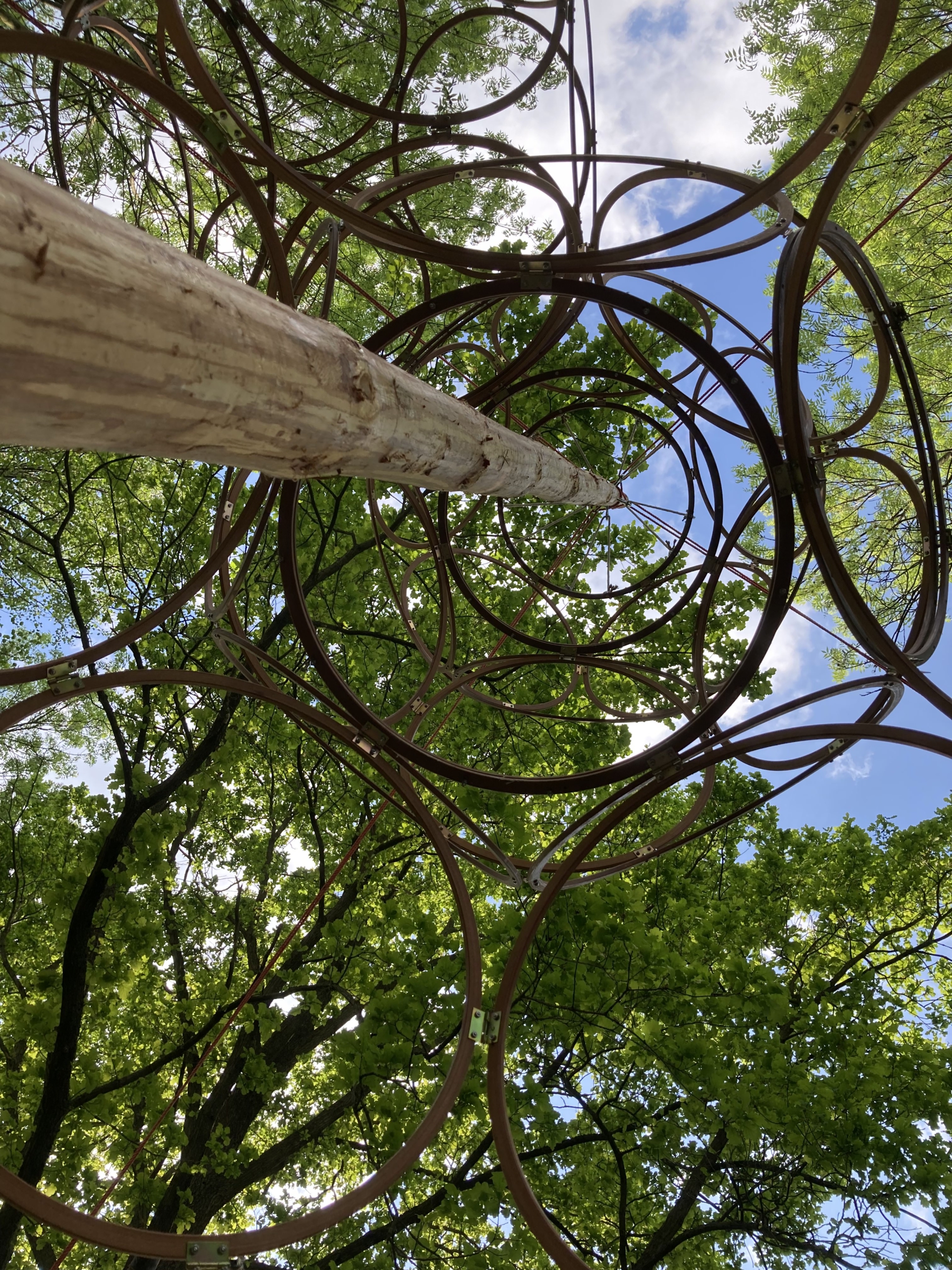



LIANAS TRELLIS was developed to bring greenery and shade into urban spaces faster. In dense cities, planting trees is often limited by space, underground infrastructure, and the time required for growth. Cities need green now, not in decades.

LIANAS TRELLIS works with climbing plants instead of trees. Climbing plants grow quickly, adapt easily, and are capable of forming dense green volumes within a short period of time. The system provides them with a three-dimensional architectural structure to grow on.

From the moment it is installed, the trellis defines space. Over time, plants take over and transform it into a living, shaded structure. LIANAS TRELLIS is not about replacing trees. It is about adding green where trees cannot grow fast enough or at all.

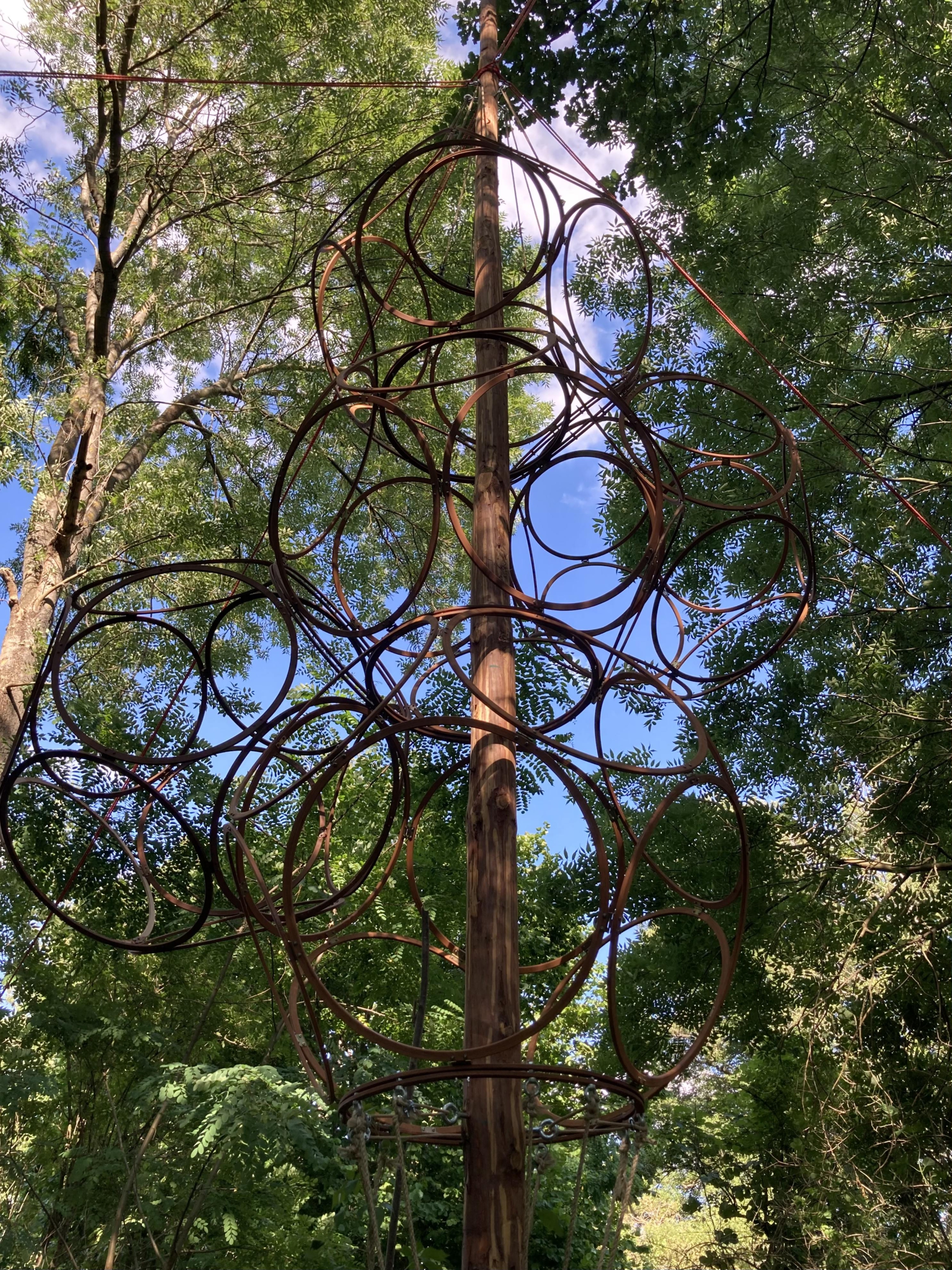
The basis of our spatial structures lies in geometric principles that have long played a fundamental role in nature, architecture and design. Polyhedra are regular three-dimensional forms with clear faces and edges and are particularly well suited for creating spatial structures. The most well known examples are the five Platonic solids.

The Dodecahedron

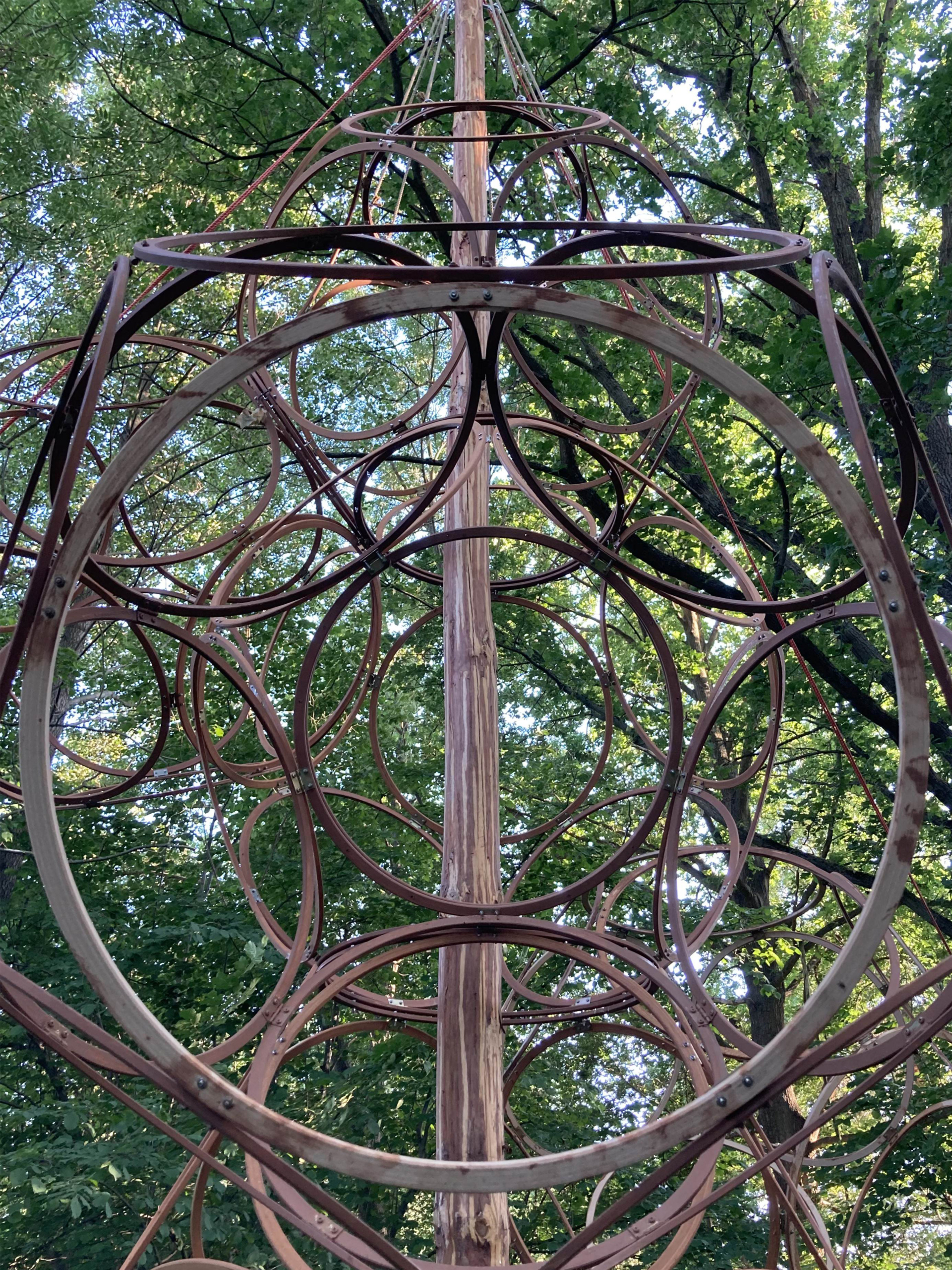
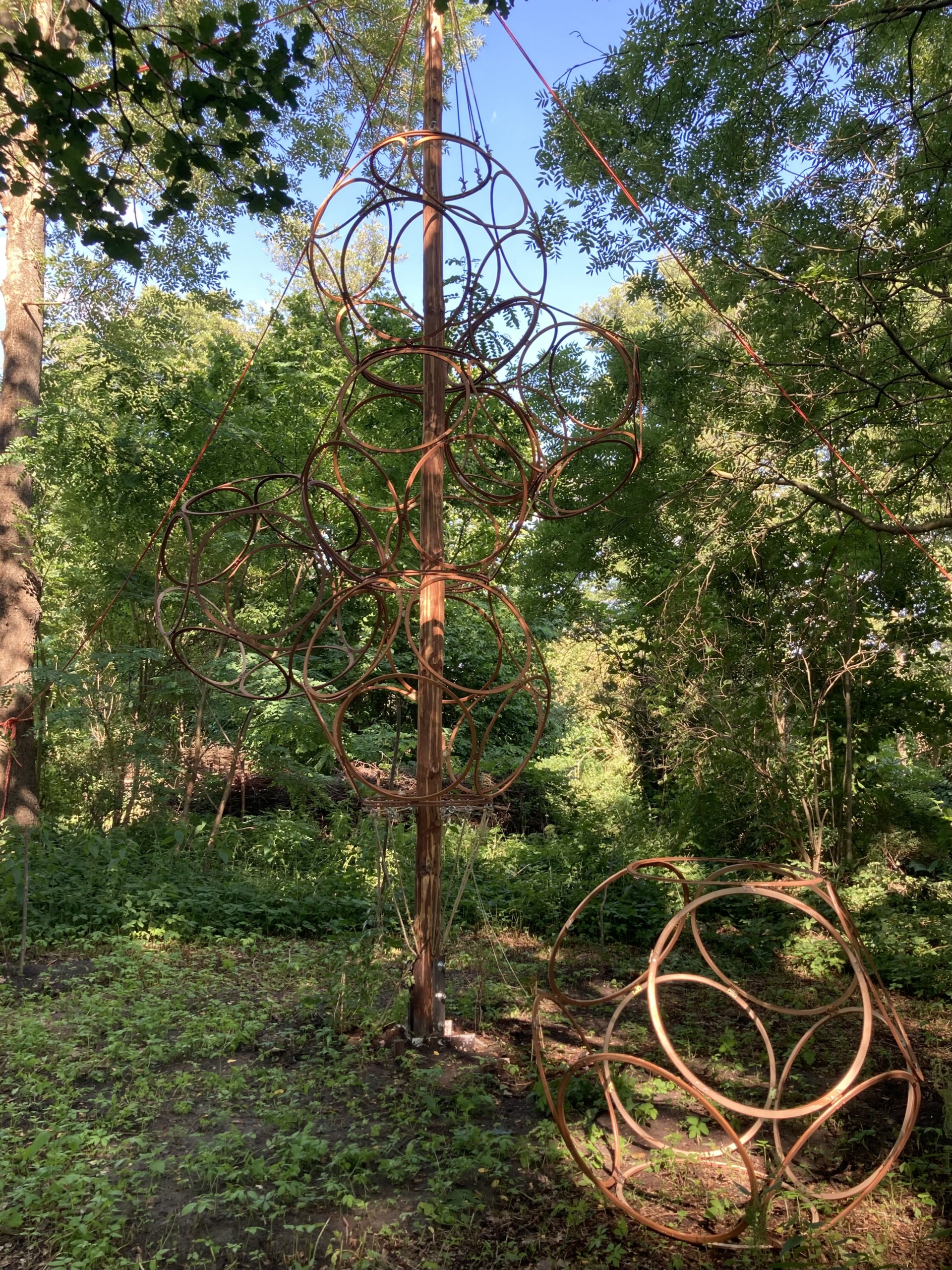
At the core of our design is the dodecahedron. Formed from interconnected rings, it creates the structural framework of our constructions. This geometry can be freely combined in space and expanded both vertically and horizontally. The result is a compact, stable and aesthetically balanced spatial volume that achieves maximum impact with minimal material use.

Modular Expansion

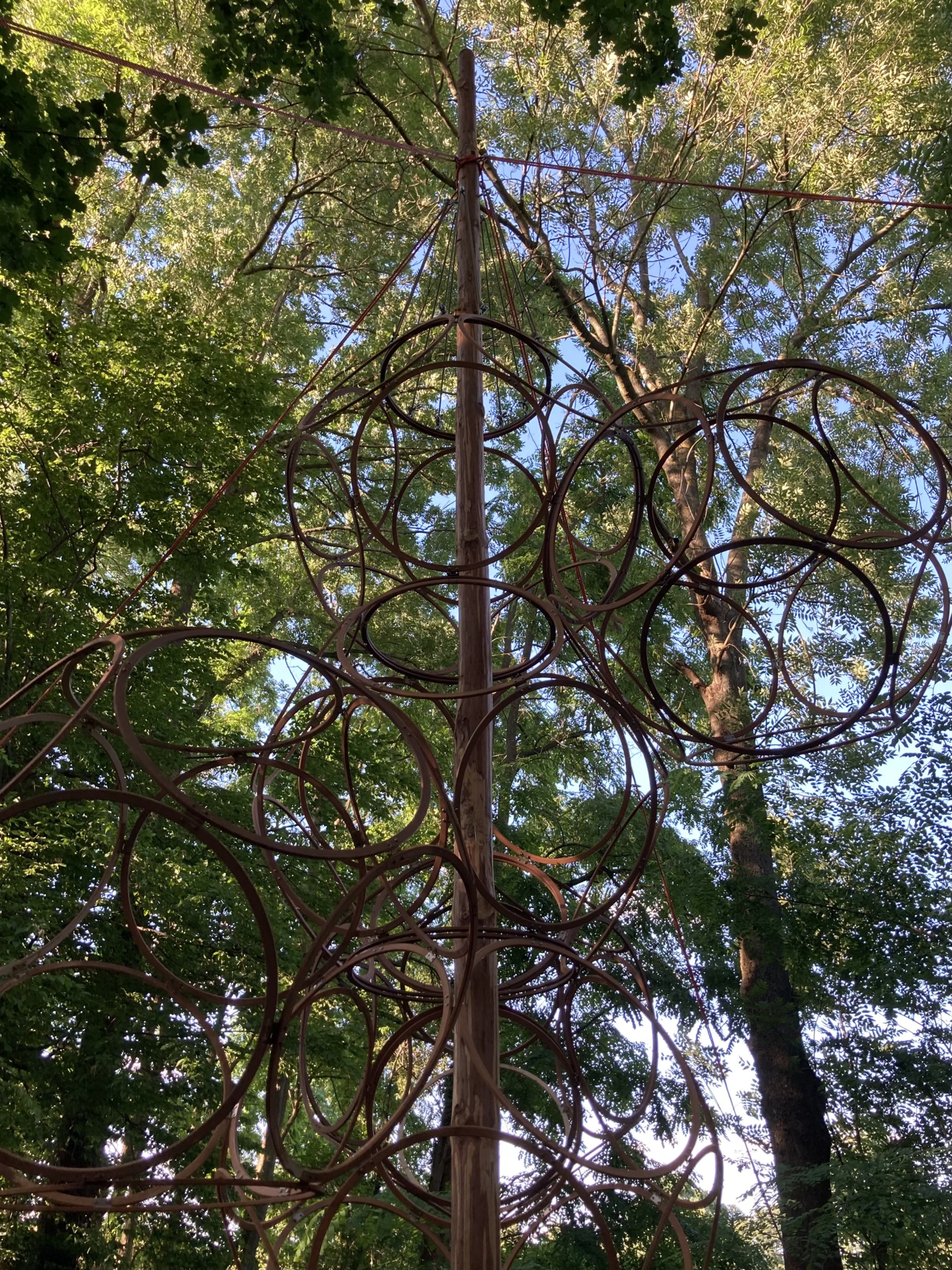
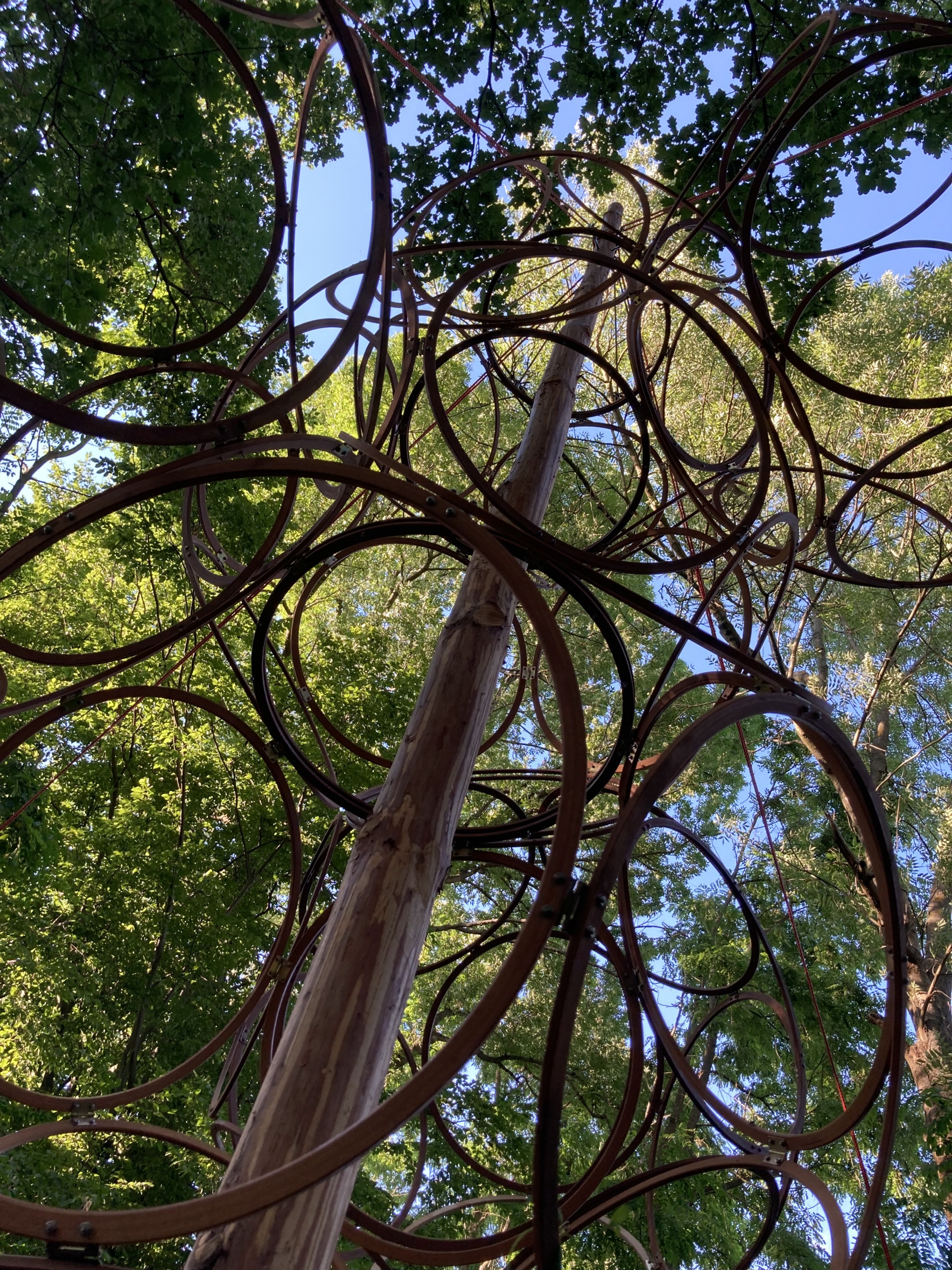
Thanks to the modular nature of the system, a wide range of configurations becomes possible. Vertical expansion is achieved through the addition of further central modules. Horizontal expansion is created through the attachment of lateral modules. Even a structure consisting of only three central modules can accommodate up to ten additional extensions.

Geometric structures for growth

LIANAS TRELLIS is based on geometric spatial structures designed for climbing plants. The system uses modular polyhedral forms that systematically fill space while remaining open for the growth of the plants.

At the core of the system is the dodecahedron. Formed from interconnected rings, it creates a lightweight yet stable framework. This geometry allows modules to be combined vertically and horizontally, resulting in compact volumes with minimal material use.

Flexible, expandable, adaptable

Thanks to its modularity, the structure can grow in height through additional central modules or expand sideways by attaching lateral modules. Even a small configuration can evolve into a complex spatial structure, adaptable to different urban conditions and scales.

Growth over time

Immediately after installation, the architectural trellis is visible and defines the space. Step by step, climbing plants take over and shape its character. Within a few years, previously open volumes are filled with greenery, providing shade and contributing to a cooler, more comfortable urban microclimate.

The appearance of LIANAS TRELLIS changes throughout the year. In summer, dense foliage creates shaded, cool spaces. In winter, the structure returns to a more open architectural expression. Growth and seasonal change are part of the design.

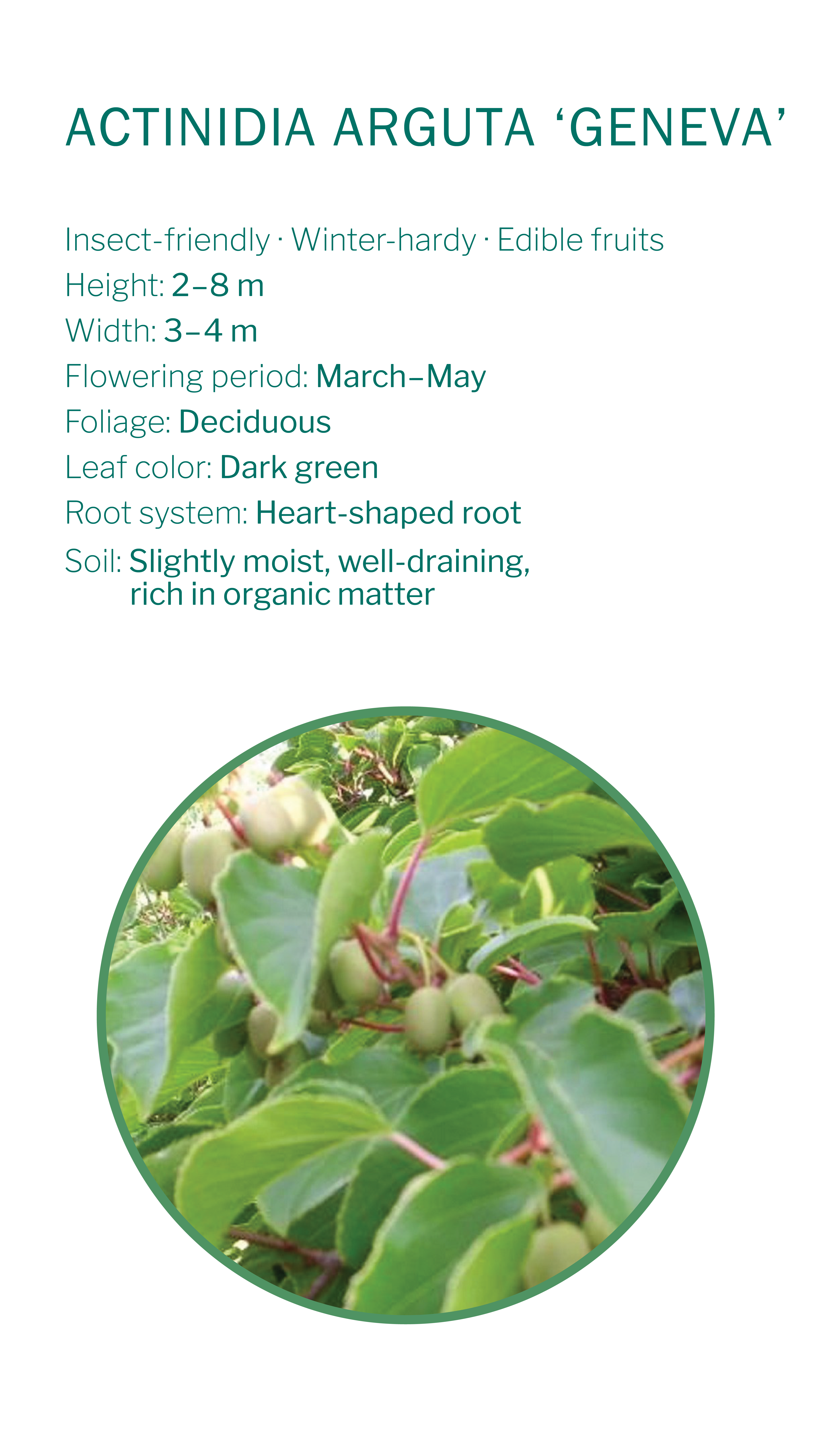
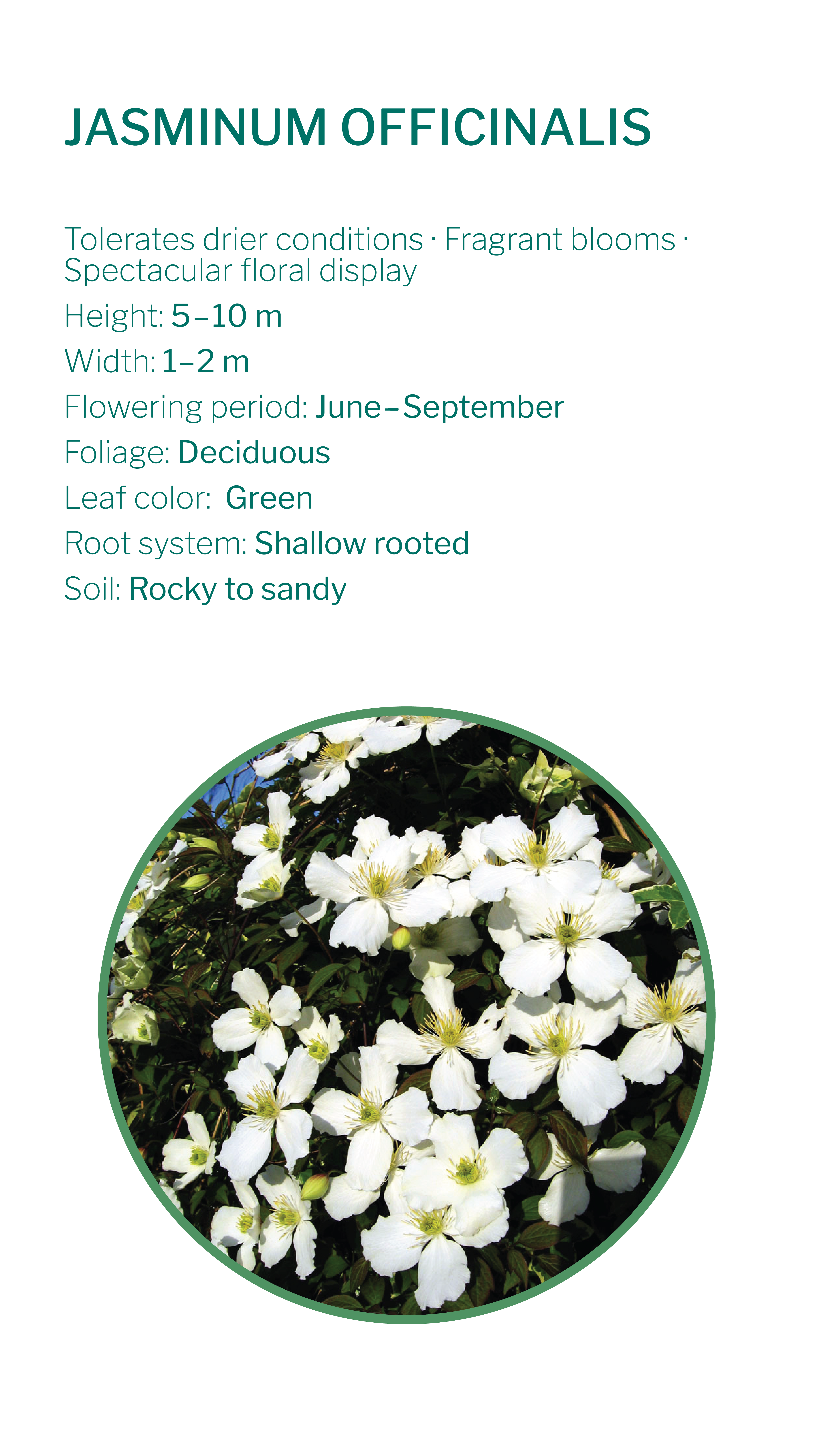
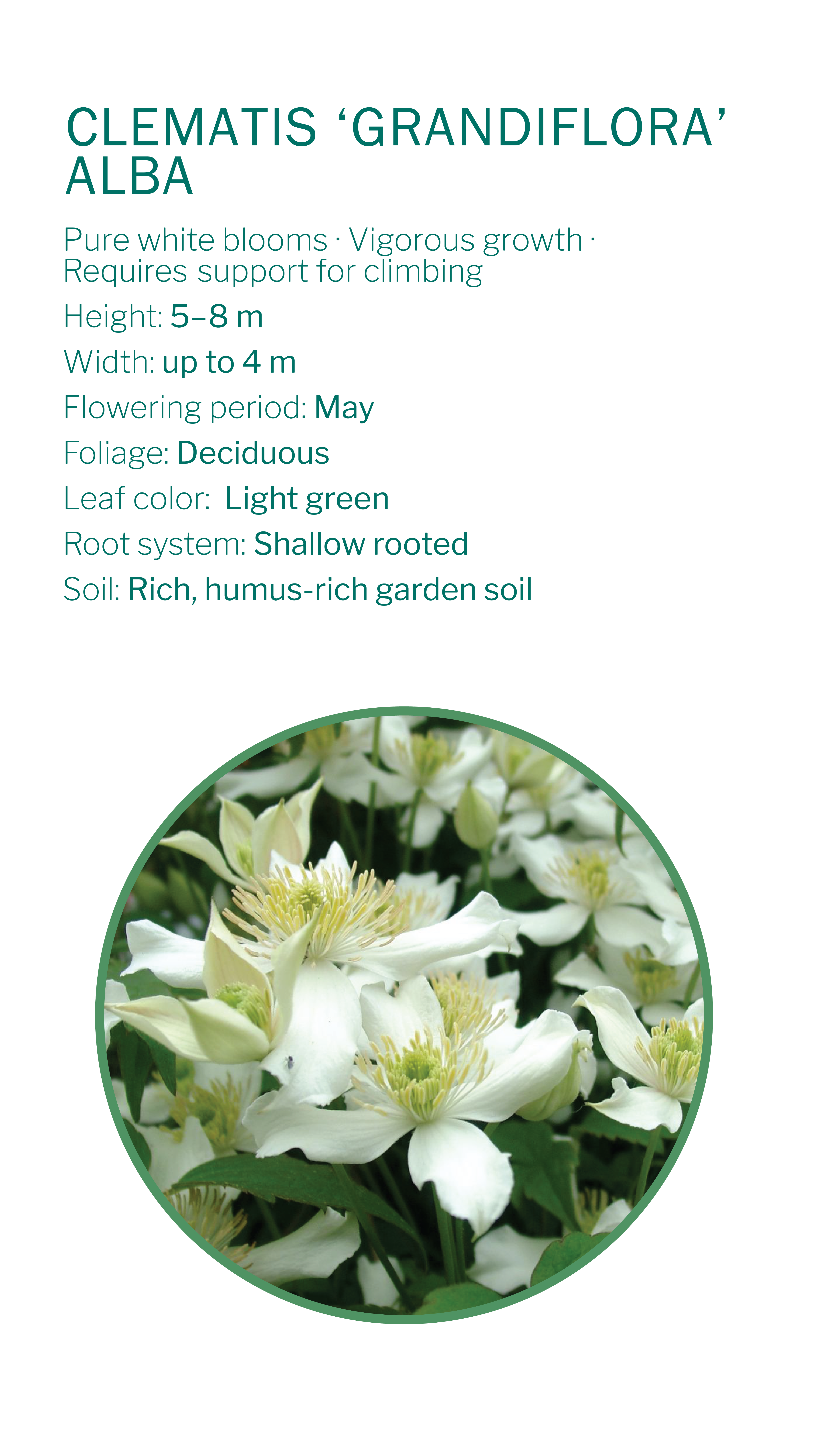
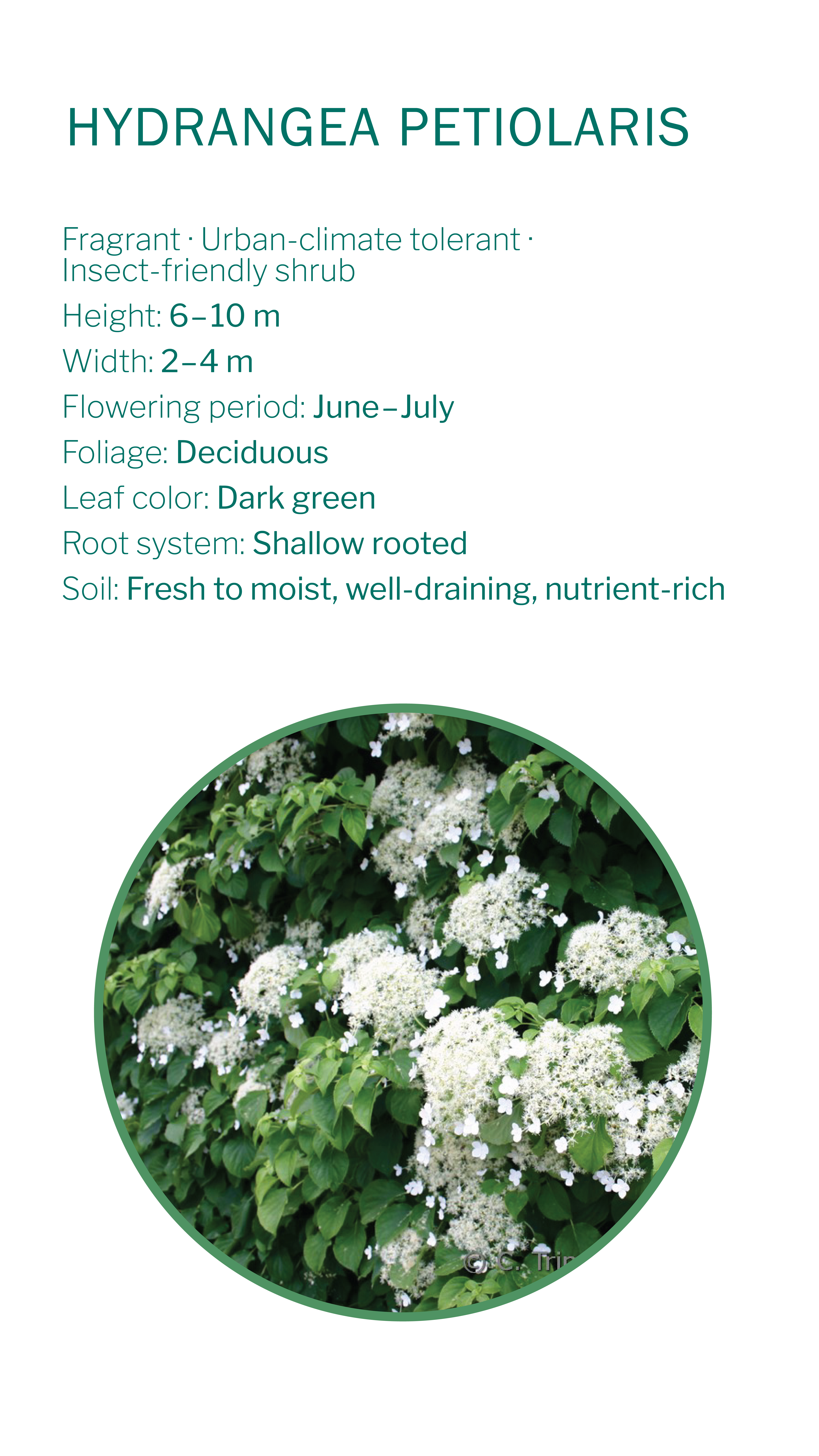
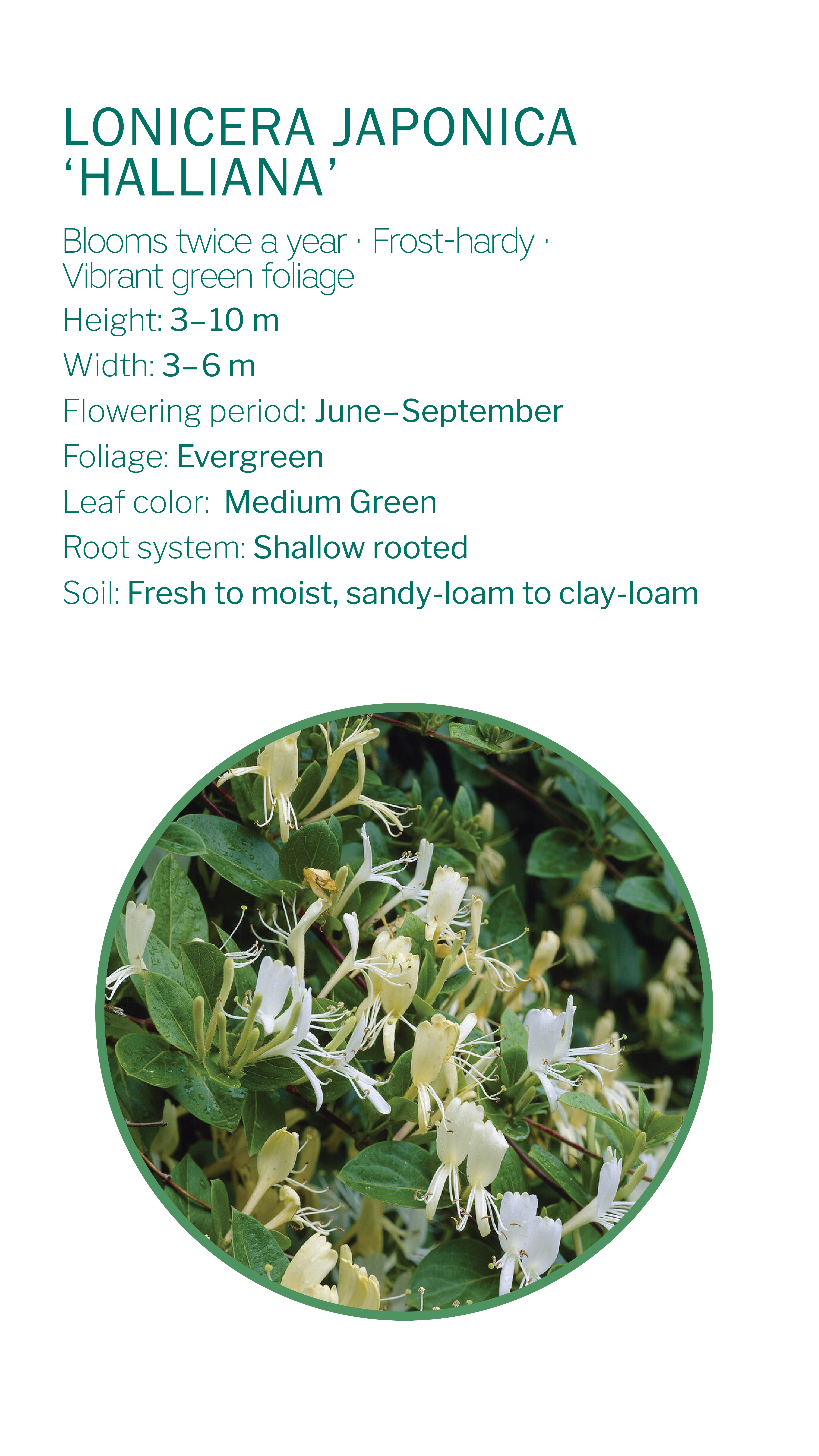
For greening the LIANAS TRELLIS structures, all twining and climbing plants are generally suitable. If certain species require additional climbing support, extra ropes can easily be integrated into the structure. In the TREE modules, the tension cables used to fix the modules to the central mast naturally serve as climbing aids.

For rapid establishment and lush growth, we recommend plant species that have proven particularly successful in our projects.